





Trips for seniors over 60 are usually sorted by destination, when the useful question is what each destination will ask of you on the day. Two places can look equally appealing in photographs and demand completely different things: one is a boardwalk with benches and a car waiting, the other is four hours of uneven ground at 3,000 m.
This guide goes region by region through Argentina and says, for each one, how far you walk, what you walk on, how high you are, and how long you sit in a car or a plane to get there. At the end there is a straight answer on which of these work with a cane, a walker, or a wheelchair.
What changes after 60, and what does not
The destination list barely changes. What changes is the shape of the day.
Three things do most of the work: how many kilometres you cover on foot, how many times you change hotel, and how much of the day is spent in transit. Get those three right and the country opens up. Get them wrong and even an easy place feels like hard work.
Of the three, hotel changes are the one people underestimate, and the number of them follows from how many regions you take on: our guide to the shortest stay each region needs puts numbers on that. Two or three across a two-week trip is comfortable; every extra one costs a morning of packing and a transfer, which is time that could have been a slow breakfast. Hotel choice also decides what the trip costs if you are booking on your own, which we go through in our guide to travelling alone after sixty.
The two ratings we plan against are simple, and it is worth asking any operator for their equivalent in numbers rather than adjectives. Easy means under 3 km of walking a day, on flat ground or boardwalks, with handrails and benches on the route and a vehicle nearby. Moderate means three to six kilometres with gentle slopes or uneven gravel, and one main activity in the day rather than two stacked together.
Buenos Aires: flat, slow, and at sea level
The easiest place in the country to start and finish. Recoleta, Palermo, and San Telmo are flat, the distances between what you want to see are short, and taxis are inexpensive. Lunch is long by local custom, which suits an unhurried day rather than working against it.
There is no altitude and no rough ground. The one thing worth planning for is the time difference: most travellers arrive in the morning after an overnight flight, so we treat the first day as a slow one and put the city walking on day two.
El Calafate and the Perito Moreno Glacier: the easiest great day in Argentina
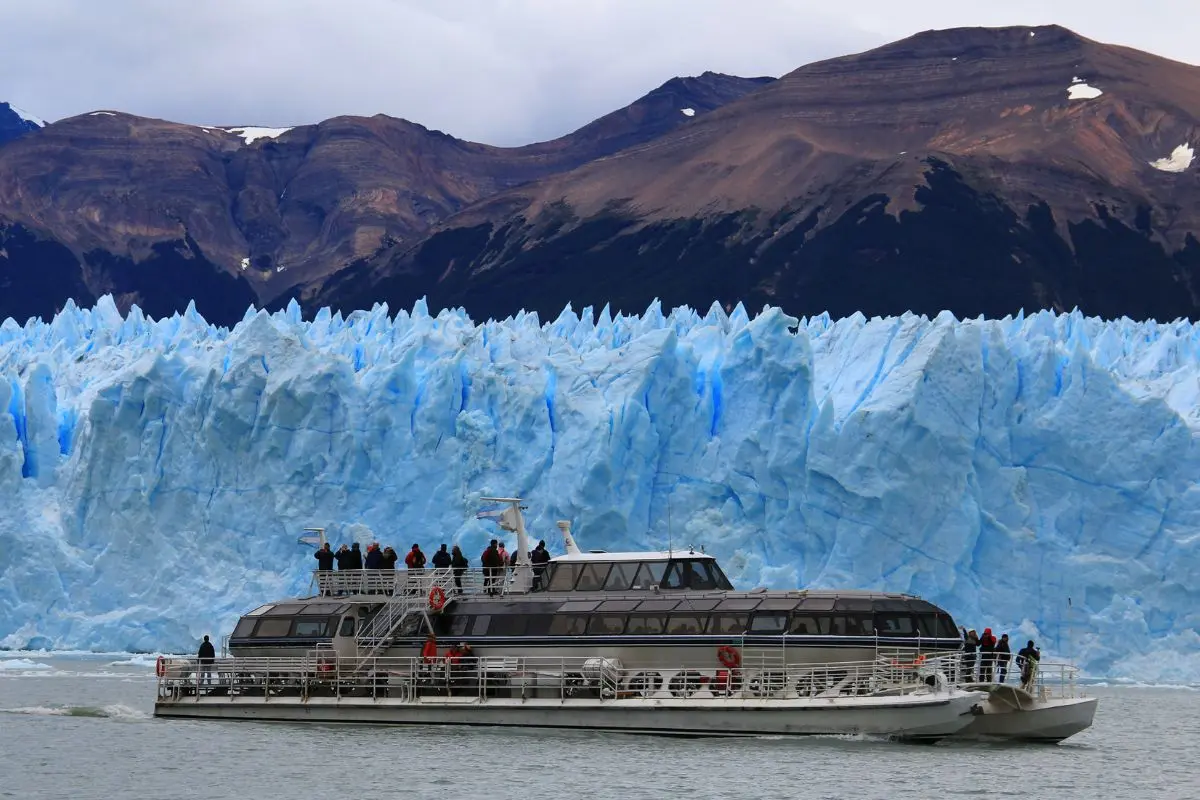
If you only keep one image from the trip, this is usually it, and it asks very little of you. The glacier front is visible from the first platform, about five minutes from the car park. From there the balcony network descends in stages, all of it metal walkway with handrails and benches, and there is a lift between the upper and lower levels.
The Worry-Free Travel Checklist
Fifteen questions worth asking any operator, on pace and mobility, group size and guides, what the price covers, health and insurance, and cancellation and weather, each with the answer worth hearing, so you know exactly what you're getting before you pay.
You choose your own distance. Fifteen minutes on the top balcony is a complete visit. Two hours on the full circuit is a different day, and both end at the same view. The boat that runs along the glacier face is the option we suggest when standing for long is the constraint.
Bariloche and the Lake District: viewpoints reached by road
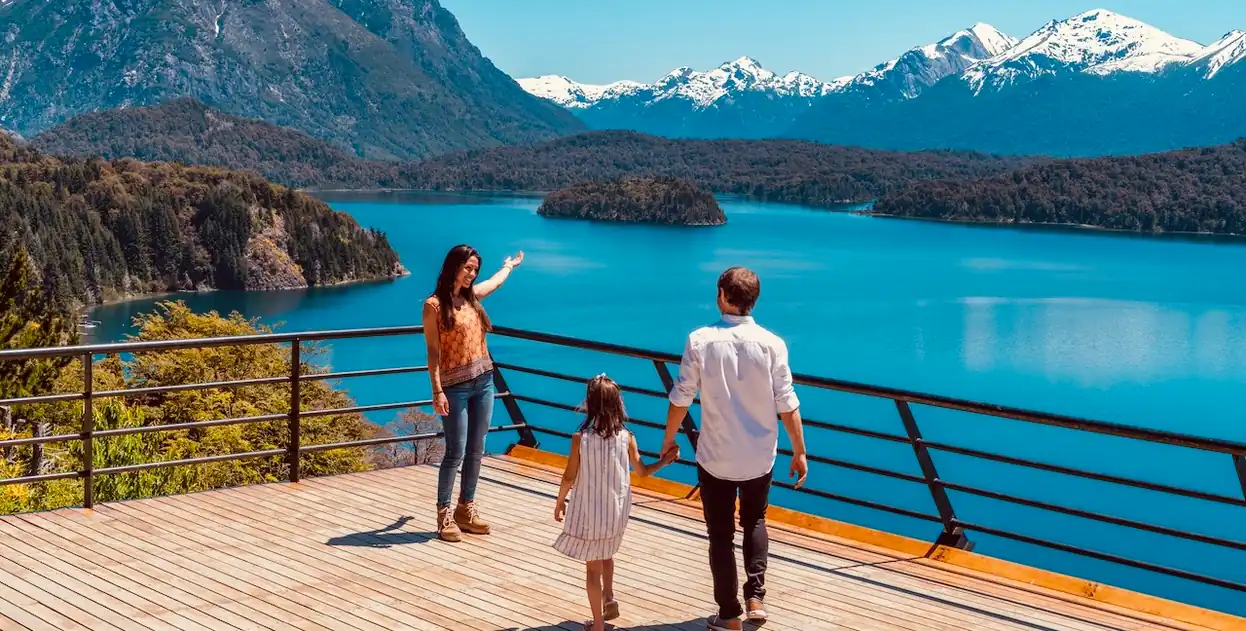
Bariloche does its scenery from the car. The Circuito Chico is a drive with viewpoints rather than a hike, and the chairlift up Cerro Campanario does the climbing for you, which buys one of the best panoramas in the country for the cost of a seat. Hotels are good, transfers are short, and there is a lake in every direction.
This is the region we suggest most often when someone wants Patagonia without the walking. Our guide to the Lake District of Patagonia covers the route in detail, and the short Bariloche Traditional trip is the three-day version of it.
Ushuaia and the Beagle Channel: a morning on the water
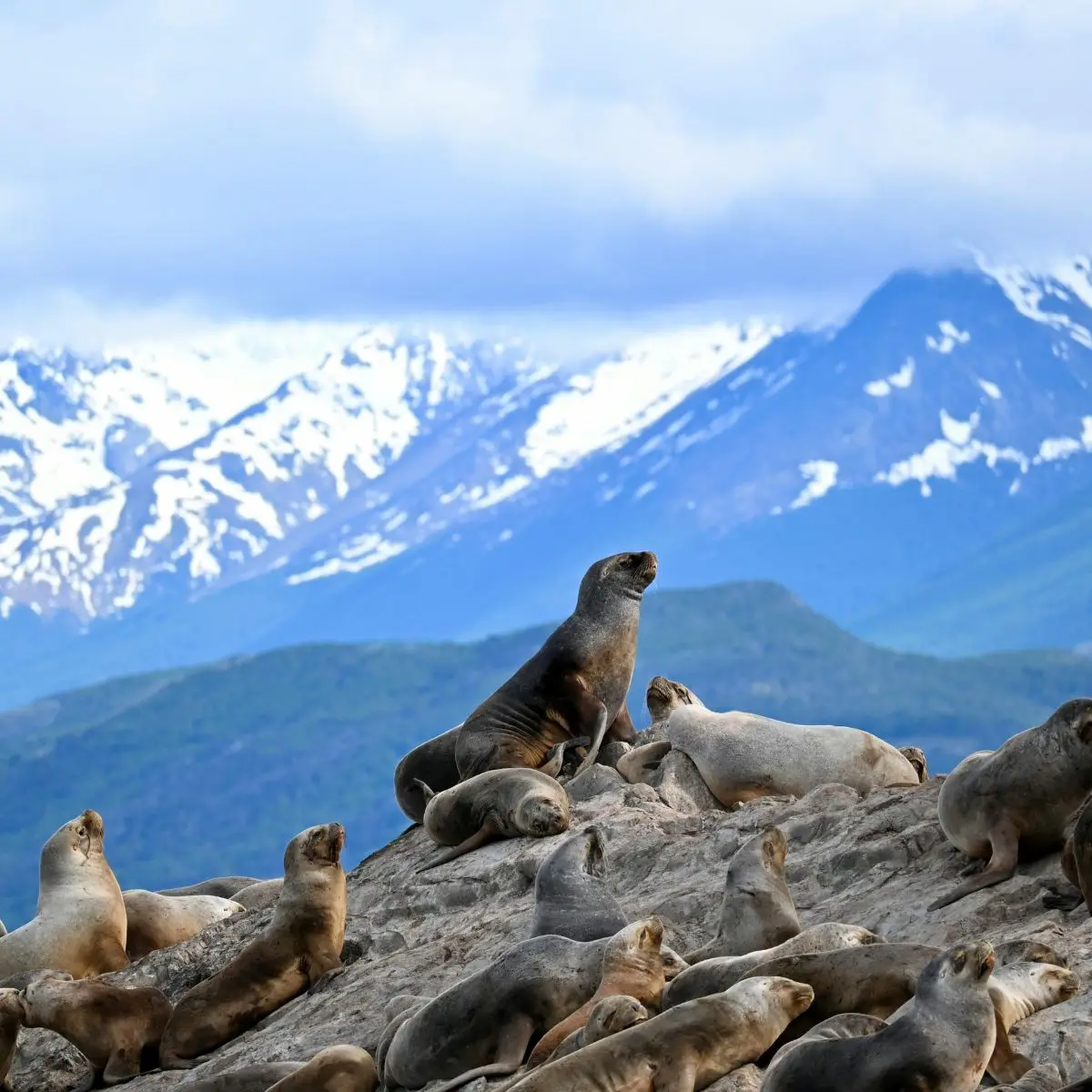
The signature day here is spent sitting down. The catamarans out of Ushuaia run flat water along the Beagle Channel past sea lion colonies and the lighthouse, with seating inside and a deck for when you want it.
The afternoon in Tierra del Fuego National Park is where the pace decision happens. The coastal path is flat and you turn back whenever you like, which makes it as long or short as you want. The trails inland are a different proposition and we would swap them for the boat.
Iguazu: boardwalks, but count the distance and the heat
The falls are a genuine highlight and the upper circuit is a boardwalk, so the ground is not the issue. Distance and temperature are. The site is large, summer afternoons are hot and humid, and the walking adds up even on level ground.
We plan Iguazu as a full day with an early start and a rest afternoon, and we book the hotel inside or beside the park so the day does not begin with an hour in a vehicle. Travellers who would rather see it in half the time take the boat and the upper circuit only, and skip the lower.
Salta and the north: the altitude decision
The north west is beautiful and it is the one part of the map where the choice deserves a conversation. Salta sits at about 1,200 m, which is unremarkable. The Quebrada de Humahuaca climbs past 3,000 m and the Salinas Grandes past 4,000 m, and that is high enough that some travellers feel it.
We do plan this region for travellers in their sixties and seventies, with acclimatisation nights built in and the high days placed late in the trip rather than early. What we would not do is put a 4,000 m day on day two of a long-haul arrival. It is a decision to make on purpose, not one to discover at the salt flats.
Patagonia, by contrast, sits close to sea level from end to end, which is one of the quieter reasons it suits an easy pace so well.
What each region asks of you, side by side
| Region | Walking per day | Ground | Altitude | Pace |
|---|---|---|---|---|
| Buenos Aires | 1 to 3 km, at your own speed | City pavement, flat | Sea level | Easy |
| El Calafate | Under 3 km, or 15 minutes | Metal walkways, handrails, lift | 200 m | Easy |
| Bariloche | Under 2 km, mostly viewpoints | Road stops and a chairlift | 800 m | Easy |
| Ushuaia | Under 3 km, coastal path | Boat deck and flat path | Sea level | Easy |
| Salta and Jujuy | 2 to 4 km | Uneven ground at viewpoints | 1,200 m to 4,000 m | Moderate |
Iguazu sits outside the table on purpose. The ground is easy and the distance is not, so it depends more on the day you choose than on the place.
The gentle version of each icon, side by side
The question we hear most often after sixty is not whether a place is worth it. It is whether there is a way to see it that does not involve the version in the photographs of people half your age. In most cases there is, and it is the same place. What changes is the route to it.
| Icon | The demanding version | The gentle version, same place |
|---|---|---|
| Perito Moreno Glacier | Minitrekking on the ice, about ninety minutes with crampons. Open to ages 10 to 65 only. Big Ice is 18 to 50. | The walkways, with ramps and a lift, and the boat to the ice face. The glacier is the same wall of ice from both. |
| Fitz Roy, El Chalten | Laguna de los Tres, around 20 kilometres and eight to ten hours, with a steep final kilometre. | Mirador de los Condores, under an hour from the village, or Laguna Capri, about eight kilometres there and back, for the same skyline. |
| The towers, Torres del Paine | The base of the towers, around 18 kilometres and eight hours. There is no shortcut to that viewpoint. | The towers from Laguna Amarga by road, and the Salto Grande walk, flat and under an hour, for the horns and the lake. |
| Beagle Channel, Ushuaia | The coastal path in Tierra del Fuego National Park, eight kilometres on uneven ground. | The catamaran to the sea lion islands and the lighthouse: a morning on the water, seated. |
| Iguazu Falls | The lower circuit, with stairs and spray, plus the boat under the falls. | The upper circuit, a flat boardwalk, and the Devil’s Throat by train with a level walkway at the end. |
The first row is the one worth reading twice. The glacier walk has an upper age limit of 65, and the longer version stops at 50, so for most travellers on this page the choice has already been made by the operator. The walkways and the boat are not the consolation prize: they are where the glacier calves in front of you, and they are where our travellers over sixty spend the day.
Which of these work with a cane, a walker, or a wheelchair
This is the question we would rather answer before building the route than after, because the answer is specific rather than general.
Manageable: the Perito Moreno walkways, the Beagle Channel catamarans, the Circuito Chico in Bariloche, and the flat neighbourhoods of Buenos Aires. Not manageable: the trails around El Chalten and the inland paths in Tierra del Fuego, where we would plan the boat or the viewpoint version of the same day instead.
Hotels we check one by one for lifts and step-free access rather than by star rating, because a four-star boutique in a converted house can have a beautiful staircase and little else.
How long to go for, and how to sequence it
The distances in Argentina are real. Buenos Aires to El Calafate is about 3 h 15 min in the air, and El Calafate to Ushuaia about 1 h 20 min. That is what makes the sequencing matter more than the total length.
As a rule we keep to one flight every few days and add a night rather than a connection. Nine to eleven days covers Buenos Aires plus one Patagonian base comfortably. Two Patagonian bases and the falls is a fourteen-day trip if you want each place to have a spare morning. The nine-day Buenos Aires, El Calafate, and Iguazu route and the ten-day Patagonia route are the two shapes we build most often for this age group.
October, November, March, and April are the months we suggest for a slower Patagonia trip: long enough days, temperatures between 10 and 20 degrees, and far quieter walkways than in January. Our guide to Patagonia in November goes month by month.
How we build it with you
Every itinerary we plan is private, so the pace is agreed before anything is booked rather than discovered on day three. We start from three answers: how far you want to walk in a day, how many hotel changes you are willing to make, and which two or three places you would be sorry to miss.
If you would like to see the range, our Argentina tours for seniors page lists every trip with its pace rating and price, and our Patagonia tours for seniors page goes deeper on the region most people come for. For the planning side of the same question, our guide on how to plan a trip at your own pace sets out what the ratings mean and what the trips cost.
For the capital in more detail, with the neighbourhoods that suit a slower day, see things to do in Buenos Aires.
For the capital, the choice of district decides how much walking a day involves. Our guide to Buenos Aires neighborhoods sets out the flat, step-free options and the ones with stairs.
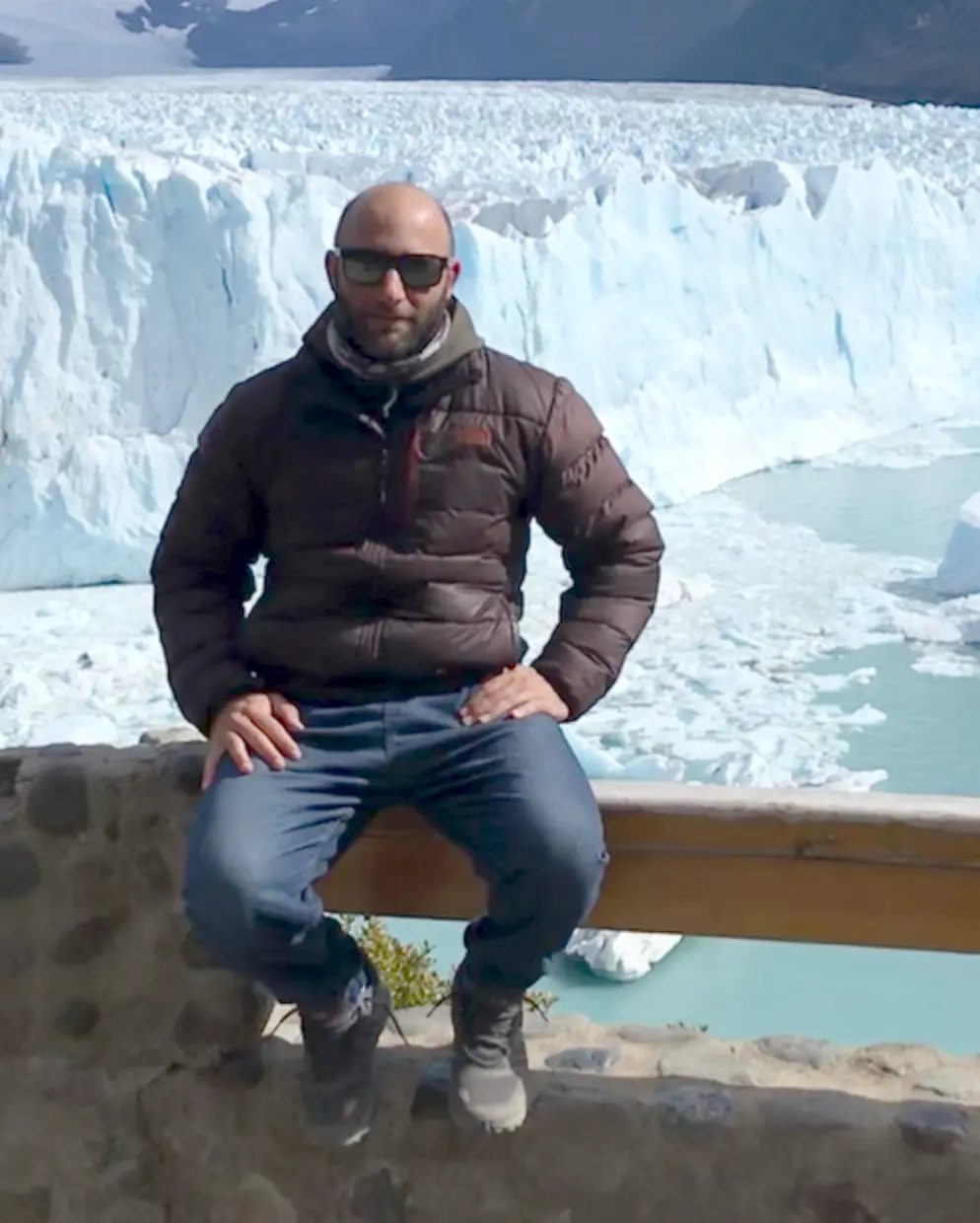
I started my professional career in the world of travel in 2003 where I graduated from Esuela La Suisse in Buenos Aires, but my passion for traveling comes from my childhood, when I started little by little to develop my spirit of adventure and love for nature.
I went through different travel companies before creating my own in 2008. Experiences that allowed me to learn about travelers, the expectations that different profiles have and to get to know Argentina and the region like the back of my hand.
By creating Argentina Pura, my greatest desire is to be able to collaborate with other people’s dreams, to make my contribution to the transformation of tourism into a truly sustainable activity that collaborates with the development of native localities and at the same time promotes their economic growth.
Argentina Pura is the combination of creativity, responsability and maturity in my world of travel.

0 Comment