



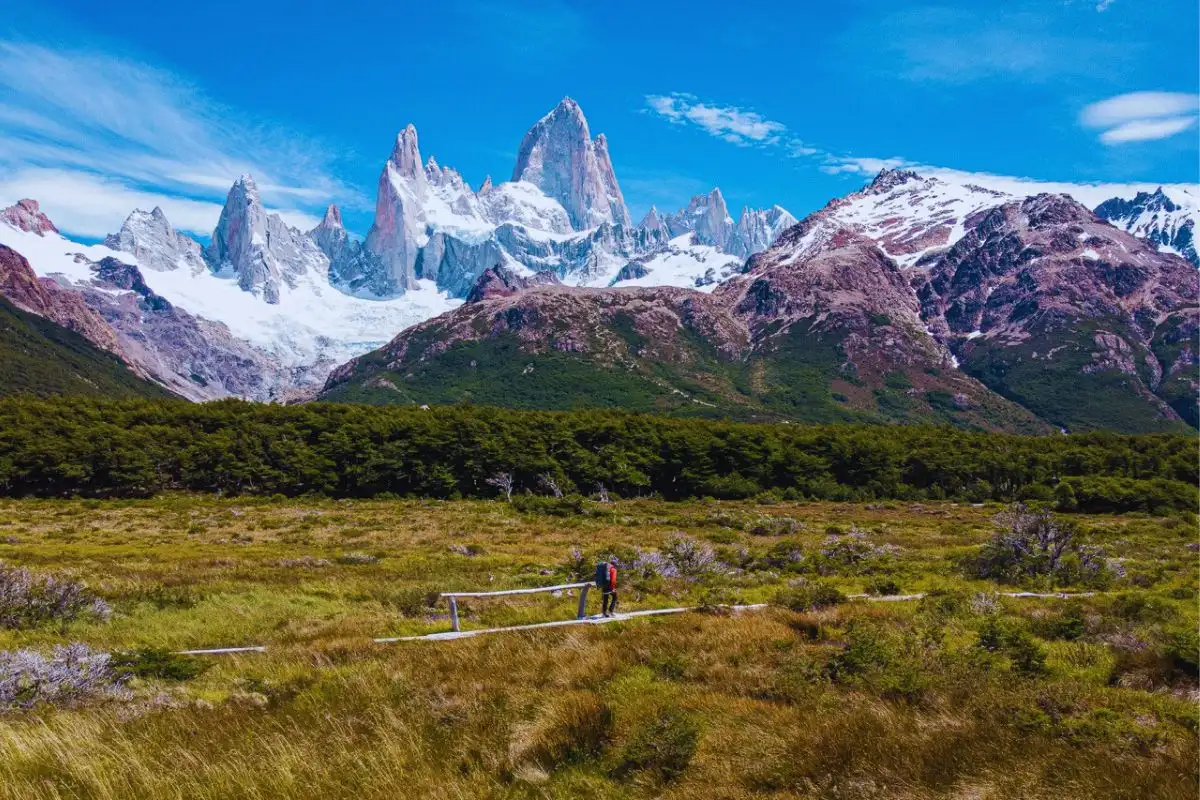
Planning a Patagonia trip starts well before booking a flight — it starts with trying to figure out what the whole thing is actually going to cost. The problem is that most estimates floating around online are so broad they’re useless: “between $50 and $500 a day” doesn’t help you build a real budget.
Patagonia isn’t expensive in the way a major European city is expensive. It’s expensive because it’s remote, seasonal, and logistically demanding. That is also why the cheapest country on the continent is rarely the cheapest trip. Everything that keeps tourism running there — fuel, food, building materials, staff — travels hundreds or thousands of miles to get there. That cost works its way into the price of every hotel night, every tour, every meal. And on top of that, most businesses operate for only five or six months a year, which means they need to generate a full year’s revenue in a very short window.
What this guide does differently is give you a real patagonia trip cost breakdown — skipping vague ranges and going straight to concrete prices, specific routes, operator names, and line-by-line breakdowns for every major expense category. Enough to build a budget that actually holds up when you arrive.
A note on prices: all prices in this article are reference values, gathered at the time of our latest review. Your final quote depends on your travel dates, season, availability, and the number of travelers in your group. For exact pricing, ask us for a personalized quote for your trip. To tell a real deal from a discount on an inflated list price, read what a real deal looks like.
Daily Budget by Travel Style
The most practical way to understand Patagonia trip cost is to start with daily spending, because that number reflects how you travel, not just where you’re going.
Pace changes the budget as much as style does. Our breakdown of trips built around a slower pace compares five routes with their days, rhythm, and starting price side by side.
Length changes it as well. Our guide to how long a Patagonia itinerary needs to be sets out the days each base takes and what five, ten, or fourteen days work out to per day.
For the length most people land on, our 10-day Patagonia itinerary puts a figure on every day of the route, including what the price covers and what you pay for on the spot.
Length changes it as well. Our guide to how long a Patagonia itinerary needs to be sets out the days each base takes and what five, ten, or fourteen days work out to per day.
Budget traveler: $80–120/day
This range assumes shared dorm accommodation or camping, grocery shopping for most meals, intercity buses, and a focus on self-guided hikes. Patagonia is one of the few destinations in the world where this style still works completely: its best experiences — the trails, glacier viewpoints, wildlife along the road — don’t require a guide or a significant entry fee. The real constraint isn’t money, it’s organization. It requires planning bus schedules carefully, booking accommodation well in advance during peak season, and staying flexible with the itinerary.
Mid-range traveler: $150–220/day
The difference here isn’t luxury — it’s rhythm. Instead of adapting every decision to the lowest possible price, you can choose a private room, eat at local restaurants most days, take the occasional private transfer when the bus doesn’t cover it, and book two or three paid experiences: a guided trek, a glacier excursion, a wildlife tour. This is the range where most travelers end up, and where Patagonia feels most balanced — you’re making decisions based on value, but you’re not negotiating every expense.
Luxury traveler: $400–900+/day
Accommodation is the main driver at this level. Premium lodges in Torres del Paine or El Calafate start at $400–600 per night and can exceed $900 for all-inclusive properties. The difference from lower tiers isn’t just comfort: many of these properties bundle transportation, guided excursions, meals, and access to areas that aren’t available to the general public into their nightly rate. If this segment interests you, our Patagonia luxury hotels guide covers the best options in detail.
One thing worth understanding: budgets tend to drift upward in Patagonia more than in other destinations. A trip that starts as mid-range can slide into luxury territory if you add last-minute private transfers, book tours without comparing prices, or pay for extra nights due to weather. Building in a 15–20% contingency buffer isn’t pessimism — it’s just what experienced travelers do. It’s one of the most common patterns we see when travelers plan their patagonia trip cost without that margin built in.
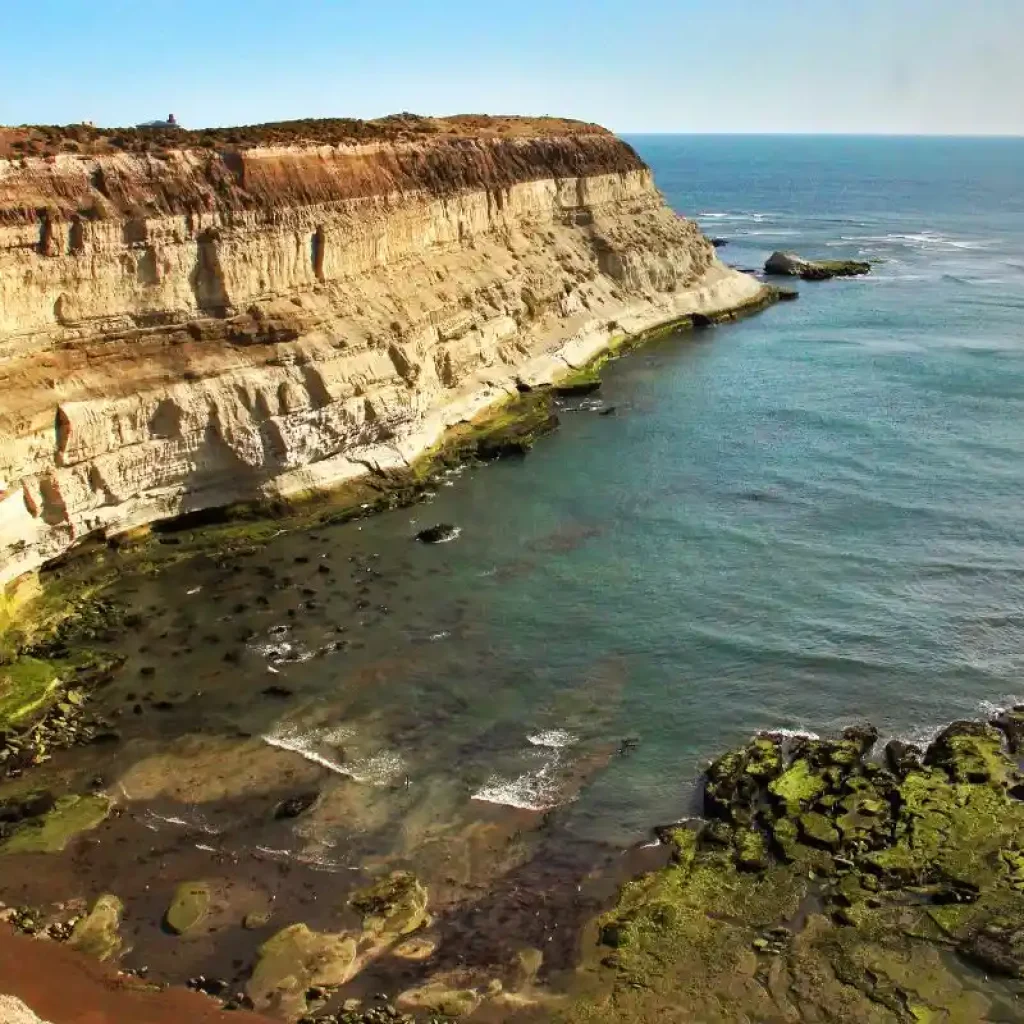
There is a fourth style that does not fit the table: booked as a package, where the flights, the transfers, and the park days are priced together before you commit. That is what our all-inclusive Argentina packages cover.
Flights: The Biggest Expense Before You Even Arrive
Flights are usually the first major line item in any Patagonia trip cost, and also the one that varies most depending on when and how you plan.
International Flights
From the United States, round-trip economy flights to Buenos Aires (EZE) or Santiago (SCL) typically run between $700 and $1,200 during the off-season. During the austral summer (December through February), that range climbs to $900–1,600. From Europe, expect €700–1,300 depending on origin and time of year. The main airlines serving these routes are LATAM, American Airlines, Delta, Iberia, and Air France.
One strategy many travelers overlook: flying into one country and out of the other. If your route covers both Argentine and Chilean Patagonia — which is the most common itinerary — flying into Buenos Aires and out of Santiago (or vice versa) is usually cheaper than booking two separate round-trips to the same hub, and it avoids backtracking.
Domestic Connections
Once you reach Buenos Aires or Santiago, you still need to get to Patagonia itself. These domestic flights are a budget item many travelers underestimate at the planning stage.
| Route | Airline | Typical price (one-way) |
|---|---|---|
| Buenos Aires → El Calafate | Aerolíneas Argentinas / JetSMART / Flybondi | $90–250 |
| Buenos Aires → Ushuaia | Aerolíneas / LATAM | $150–300 |
| Santiago → Punta Arenas | LATAM / Sky Airline | $90–200 |
| Santiago → Puerto Natales | LATAM | $100–220 |
| Buenos Aires → Bariloche | Aerolíneas / LATAM / JetSMART | $80–180 |
Practical tip: Low-cost carriers JetSMART and Flybondi now operate the Buenos Aires–El Calafate route with fares starting around $90 — significantly cheaper than Aerolíneas Argentinas in the off-season. The trade-off is less flexibility if your flight gets canceled. For peak season travel, booking 6–8 weeks in advance is the minimum — prices rise fast and flights fill up.
For a complete guide on how to get to Patagonia — including bus, ferry, and overland options — check out our guide on how to get to Patagonia.
Accommodation: The Expense That Shapes Your Total Most
Accommodation typically accounts for 35–45% of the total budget for a Patagonia trip. It’s also the category with the widest variation between travel styles, and where a bad decision on timing or location has the biggest financial impact.
Budget Options ($18–45/night)
Dorm beds in the main Patagonian towns run $18–28 per night. Private rooms in hostels go for $40–55. The best-known options — Erratic Rock in Puerto Natales, Hostel del Glaciar in El Calafate — have communal kitchens that make self-catering genuinely practical, which is where the real savings happen. Camping is the cheapest option: organized campgrounds in towns cost $10–15 per night, and inside national parks, anywhere from $8 to $25 depending on the level of service.
One important note on location: a “cheaper” hotel outside walking distance of the center can force you into frequent taxis or transfers that eat up the savings. In Patagonia, accommodation cost always needs to be read alongside the cost of getting around from that accommodation.
Mid-Range ($70–130/night)
Private rooms with en suite bathrooms, heating, and sometimes breakfast included — the minimum for traveling comfortably in a climate that can be unforgiving. In El Chaltén, a smaller and less touristy town than El Calafate, you’ll find solid options at the lower end of this range. In El Calafate and Puerto Natales during peak season, expect to pay $90–130 for something equivalent. Family-run guesthouses tend to be the best value in this tier: more personal than chain hotels, slightly cheaper, and usually better sources of local information.
Luxury Lodges and Premium Properties ($350–900+/night)
Patagonia has some of the most renowned lodges in the world. Explora Patagonia, Tierra Patagonia, and Awasi Patagonia in Torres del Paine start at $480 and can exceed $900 per night, but in most cases that rate includes meals, guided excursions, internal transfers, and exclusive access to remote areas. In other words, the apparent nightly cost isn’t the true cost per experience — you need to calculate how much of what you’d otherwise pay separately is already included.
Food: Where the Real Value Is
Food is the most flexible category in any Patagonia budget, and when managed well, one of the easiest to control without sacrificing the experience.
Grocery shopping at supermarkets — La Anónima in Argentina, Unimarc or Líder in Chile — runs $15–20 per day covering breakfast, lunch, and a basic dinner. Pasta, eggs, bread, cheese, vegetables, coffee: enough to keep you going on the road. Hostel kitchens make this genuinely easy. The main limitation is that in smaller towns like El Chaltén, selection is thinner and prices a bit higher than in El Calafate or Puerto Natales — it’s worth stocking up before you arrive.
For travelers who eat at restaurants most of the time, the mid-range runs $35–55 per day. Lunch is where the best value is: the menú del día (set lunch of soup, main, and a drink) costs $10–14 at most local restaurants between noon and 3 p.m. Ordering à la carte for dinner pushes the per-dish cost to $18–25.
A few local specialties deserve a place in the budget because they define what eating in Patagonia actually is. Cordero al asador — lamb slow-roasted over a wood fire for hours — runs $22–32 at a restaurant and is an experience as much as a meal. Centolla (king crab) in Ushuaia is $28–45 at a decent restaurant and is one of the finest seafood products you’ll find anywhere in South America. Patagonian trout at a lakeside restaurant costs $16–24. None of these need to be an everyday expense, but it’s worth budgeting for at least two or three over the course of a trip.
Getting Around Patagonia
The scale of Patagonia surprises most first-time visitors. Distances are enormous, routes are limited, and transportation is a budget item that can shift significantly depending on how you plan it.
Intercity Buses
Buses are the backbone of transportation for budget and mid-range travelers. They’re reliable, scenic, and dramatically cheaper than any motorized alternative.
| Route | Company | Cost | Duration |
|---|---|---|---|
| El Calafate → El Chaltén | Cal-Tur / Chaltén Travel | $35–45 | 3 hrs |
| Puerto Natales → Torres del Paine (round trip) | Buses JB / Gómez | $25–40 | 1.5 hrs each way |
| Punta Arenas → Puerto Natales | Bus Sur / Pacheco | $12–20 | 3 hrs |
| Bariloche → El Bolsón | Andesmar / Ko’ko | $10–16 | 2 hrs |
Most services run once or twice daily in each direction. During peak season (December–February), booking in advance is essential — especially for Torres del Paine transfers, which fill up fast.
Car Rental
Having your own vehicle completely changes the logic of the trip: you can reach remote trailheads, adjust your departure time based on weather, and stop wherever you want. The cost is real, but split between two or more people it becomes competitive.
An economy car runs $55–75 per day. A 4×4 or high-clearance vehicle — recommended for gravel sections on Ruta 40 or the Carretera Austral — goes for $80–110 per day. Comprehensive insurance adds $20–35 daily. Fuel for a typical week of driving in Argentine Patagonia runs about $60–90; it’s more expensive on the Chilean side.
The less obvious advantage: in Torres del Paine, having your own car lets you drive directly to trailheads, which eliminates the organized transfers from Puerto Natales that add up to $25–40 per person per day if you rely on them consistently.
Shared Transfers and Private Transport
Shared shuttle vans connect airports to town centers ($15–25 per person) and link some towns to each other. For groups of 3–4 people, a private transfer ($50–80) sometimes competes on price with shared transport once you factor in time and logistics.
Activities and Park Entry Fees
Most of Patagonia’s most memorable experiences cost nothing beyond the park entrance fee. The trails in El Chaltén — Laguna de los Tres, Laguna Torre — are completely free and self-guided. So are the walkways overlooking Perito Moreno Glacier. What costs money are the experiences that require equipment, certified guides, or boat logistics.
National Park Entrance Fees
| Park | Entry fee (foreign adults) | Notes |
|---|---|---|
| Torres del Paine (Chile) | ~$36 USD (CLP 34,000, up to 3 days) | ~$51 USD (CLP 48,500) for 4+ days; buy online in advance via CONAF |
| Los Glaciares (Argentina) | ~$33 USD (ARS 50,000) per day | 50% off a second entry within 72 hours |
| Tierra del Fuego (Argentina) | ~$27 USD (ARS 40,000) | — |
| Nahuel Huapi (Argentina) | ~$23 USD (ARS 35,000) | — |
These are the official rates for foreign visitors updated in mid-2026 (Argentine parks raised fees in June 2026); none of these parks currently offers low-season discounts, so budget the same figure year-round.
Glacier Experiences
The Big Ice trek on Perito Moreno — a full-day guided hike on the glacier with crampons — costs around $435 (ARS 654,000, transfers included) in the 2026 season. The Minitrekking (shorter, more accessible version) runs $265–315 (ARS 395,000–475,000, without/with transfer). The Grey Glacier catamaran cruise on Lago Grey costs $110–140. These activities are expensive because what you’re paying for includes certified guides, safety equipment, insurance, and transportation logistics to the starting point.
Trekking in Torres del Paine
The W Circuit and O Circuit trails are free with park entry — what costs money is accommodation inside the park (refugios and campsites) and, if you go the organized route, guide and meal services.
- Independent W Trek (4–5 days): ~$51 entry (4+ day pass) + $120–180 in campsites + food. Approximate total: $230–280, not including internal flights.
- Organized W Trek (guide, meals, accommodation included): from about $1,500 per person.
- Full O Circuit (7–8 days) as an organized package: from about $2,500 per person.
The organized version makes sense if you don’t want to carry heavy gear or manage every booking yourself. The independent version is perfectly doable for anyone in reasonable shape. To figure out which route and format works best for your trip, our Patagonia hiking guide covers every option in detail.
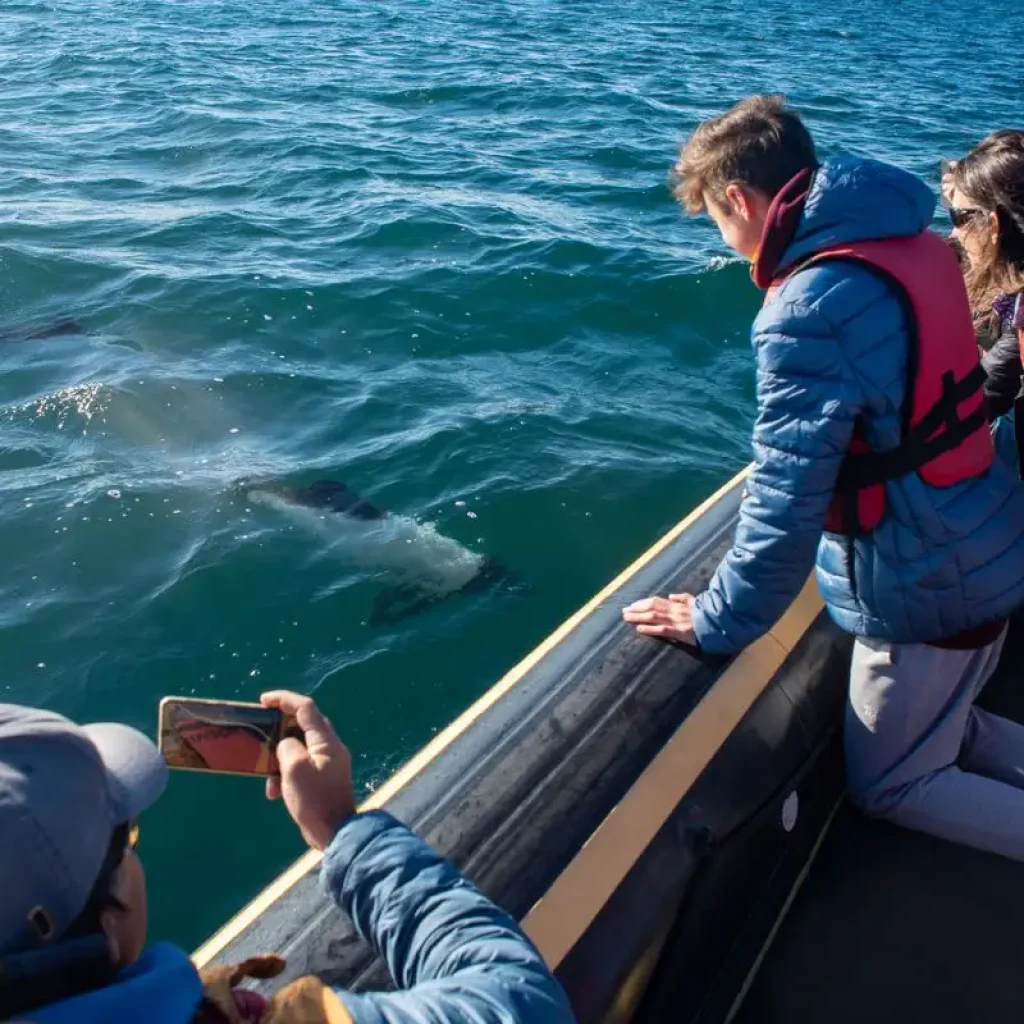
Wildlife and Marine Activities
- Whale watching in Puerto Madryn (June–December): $65–90
- Penguin colony tours (Punta Tombo, Isla Magdalena): $55–85
- Beagle Channel catamaran tour, Ushuaia: $45–70
- Sea lion colony visit, Puerto Madryn: $40–65
Why Is Patagonia So Expensive?
This is one of the most searched questions about the destination, and it deserves an honest answer that goes beyond “it’s far away.”
- Geography makes everything operationally expensive. Patagonia is thousands of miles from the main distribution centers of both Argentina and Chile. Fuel, food, construction materials, and even seasonal staff all have to travel long distances to get there. That logistical cost feeds directly into the prices you pay.
- Seasonality compresses revenue. The active tourism window in southern Patagonia lasts about five months, roughly November through March. A hotel, tour agency, or restaurant has to generate in five months what another destination would generate in twelve. The inevitable result is higher per-night and per-tour pricing in relative terms.
- Demand outstrips supply in peak season. Torres del Paine receives over 200,000 visitors a year through a handful of access points and a fixed number of beds. By January and February, W Trek refugios sell out months in advance. That demand pressure has a direct impact on prices across the entire tourism ecosystem around the park.
- Safety and sustainability standards have real costs. Certified glacier guides, water treatment systems at remote lodges, regulated access to protect ecosystems — all of this raises operating costs. It’s not a complaint; it’s part of what keeps Patagonia as Patagonia.
- Argentina vs. Chile. For years, Argentine Patagonia was noticeably cheaper than Chilean Patagonia thanks to the exchange rate advantage. That gap has closed considerably: today the difference is around 10–20% in Argentina’s favor, far from the 30–40% spread that existed a few years ago. Travelers arriving with the historical expectation of “cheap Argentina” will find prices much closer to international levels, especially in El Calafate and Ushuaia.
How to Cut Costs Without Ruining the Trip
Not every budget cut has the same impact on experience. These are the ones that actually move the needle.
- Travel in shoulder season. March–April and October–November are the months where savings are most significant and the trade-off in experience is smallest. Accommodation drops 25–40%, and W Trek refugios go from sold out months in advance to bookable two weeks out. Weather in March and April is often more stable than in the middle of summer.
- Self-cater for most of your meals. Eating at restaurants every day can run $40–55 daily. Cooking your own food brings that down to $15–20. The difference over two weeks is $350–500 — enough to cover two or three paid experiences that otherwise wouldn’t fit the budget.
- Share a rental car if you can. A 4×4 at $90 per day split four ways comes out to $22.50 each — less than the intercity bus, with total route flexibility and access to trailheads the bus doesn’t reach.
- Book tours directly with local operators. Hotel lobby agencies charge a markup over the direct price. The same tours with the same companies cost $15–30 less when booked directly at the Buses JB, Chaltén Travel, or glacier operator offices in El Calafate.
- Budget park entry fees from the start. If your trip includes Torres del Paine, Los Glaciares, and Tierra del Fuego, entry fees alone add up to over $110 per person. It’s not a small expense, and many travelers don’t account for it until they’re already there.
Where the money goes depends less on the season than on who puts the trip together: this is how to choose a Patagonia tour company without paying twice for the same day.
What a 10-Day Trip Actually Costs — Full Breakdown
To make the numbers concrete, here’s a line-by-line breakdown of a mid-range 10-day trip combining Argentine and Chilean Patagonia, excluding international flights:
| Segment | Details | Cost |
|---|---|---|
| Days 1–2: El Calafate | Flight BUE→FTE, 2 nights hotel, meals | $450 |
| Day 3: Perito Moreno | Full-day tour + park entry + meals | $140 |
| Days 4–6: El Chaltén | Bus + 3 nights hostel/budget hotel + mixed meals | $225 |
| Days 7–9: Torres del Paine | Bus to Natales + 1 night + 2-day organized W Trek + entry | $535 |
| Day 10: Return | Bus to Punta Arenas + flight to Santiago + meals | $235 |
| Total in-region | $1,585 |
With a 15% contingency buffer: ~$1,820 realistic total.
A budget traveler covering the same route via camping, self-catering, and independent hiking can do it for $900–1,100. A traveler staying at premium lodges with private guides could pay $5,000–8,000 or more for the same 10 days.
Costs Most Travelers Don’t See Coming
There’s a category of expenses that doesn’t show up in initial budgets but adds up to $300–600 on a two-week trip if you don’t account for it.
- Travel insurance ($80–140). In Patagonia this is not optional in any meaningful sense. A medical rescue in a remote area, an emergency evacuation, or a weather-related cancellation can cost $5,000–15,000. Make sure your policy explicitly covers trekking, glacier walks, and trip interruption due to weather — many standard policies don’t.
- ATM and currency fees ($30–60). Foreign ATM withdrawals typically carry $5–8 per transaction plus a 2–3% foreign exchange spread from your home bank. Over two weeks with three or four withdrawals, that’s $40–60 gone without much notice. A fee-free travel debit card like Wise eliminates most of that cost.
- Excess baggage on domestic flights ($30–80). Argentine and Chilean domestic carriers allow 15–23 kg of checked baggage in economy. Trekking or camping gear pushes many travelers over that limit easily. Weigh before you get to the airport.
- Tips and gratuities ($80–150 over two weeks). Tipping 10% is standard at restaurants in both Argentina and Chile. Tour guides expect $5–15 per person per day for group tours, more for private guides. Small per-transaction, but real in the total.
- Gear rental ($40–100). If you’re not bringing your own sleeping bag, trekking poles, or waterproof layers, renting them in El Chaltén or Puerto Natales costs $10–15 per day for the sleeping bag and $5–7 for poles. Bring your own gear if you already have it.
How to Build Your Budget Before You Book Anything
Before confirming flights or accommodation, it’s worth working through this checklist.
First, be honest about your travel style — not the one you aspire to, but the one you actually have. If you always end up eating at restaurants even when you planned to cook, that should be in the budget from the start.
Second, calculate international and domestic flights as a single complete line item. They’re the most predictable expense and the one that changes most based on how far in advance you book.
Third, identify which paid experiences are non-negotiable for you — a guided trek, the Big Ice, whale watching — and budget those first. Everything else fits around them.
Fourth, add up the national park entry fees for every park you plan to visit. Torres del Paine plus Los Glaciares alone add up to about $85–90 per person.
Fifth, add 15–20% contingency to your total. Patagonia rewards flexibility — having room in the budget for an extra night due to bad weather or a spontaneous experience that wasn’t in the plan makes the trip better, not more expensive.
Once you have a budget figured out and you’re ready to plan the actual route, our complete Patagonia exploration guide is a good next step. Understanding your patagonia trip cost in advance is what separates a trip that delivers from one that runs out of budget halfway through.
Have specific questions about costs for your trip? The Argentina Pura team can help you put together a personalized budget based on your travel dates, destinations, and style.
If you would rather start from a figure that already holds together, our all-inclusive Patagonia trips set out what is covered before you plan around it.
Tell us the dates and the pace you have in mind, and we will price a tailor made Argentina trip in writing before you decide.

Due to my professional background, I have extensive skills in the identification and characterization of target audiences, which allows me to understand the needs, preferences and specific behaviors of each segment, in order to design effective strategies that contribute to the success of the organization’s communication goals.
I work in the creation of digital content and the design of narratives for companies in the travel and tourism sector, contributing significantly to the promotion of destinations, services and exclusive experiences, generating a positive impact on brand perception.
Throughout my career, I have acquired solid experience in project planning and management, and I am passionate about research and data analysis, especially oriented to the development of user-centric products.
My experience encompasses the development and implementation of sustainable practices in processes, for building solutions that generate positive impact both socially and environmentally.
Always committed to designing effective solutions, I am dedicated to address challenges and contribute to the growth and development of teams and organizations with a holistic and sustainable approach.

0 Comment