


Few places on earth put you this close to patagonia animals this quickly.. Drive the road between El Calafate and El Chaltén and guanacos appear within the first twenty minutes. Walk the trails of Torres del Paine and condors circle overhead before you’ve reached the first viewpoint. Sit on the cliffs above Puerto Pirámides in September and Southern right whales breach in the bay below. Patagonia’s wildlife isn’t tucked away — it’s part of the landscape, woven into every valley, coast, and ice field.
This guide covers the animals you’re most likely to encounter across Patagonia’s main destinations — both Argentine and Chilean — with specific information on where to find each species, the best time of year to see them, and what to realistically expect. It’s built for travelers who want more than a species list: you’ll find the context that makes an encounter meaningful and the practical details that make it possible.
The Patagonia Animals You’re Most Likely to See
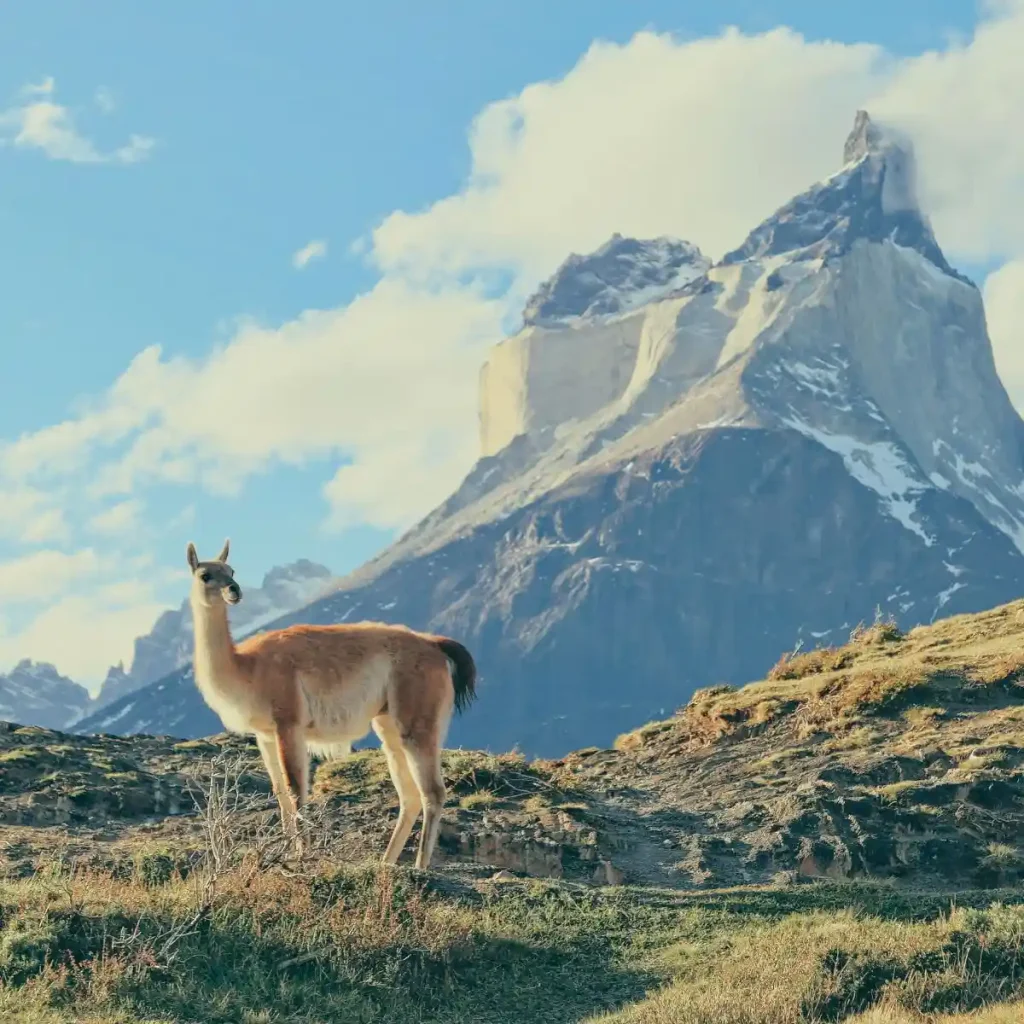
Guanaco — the animal that defines Patagonian landscapes
If there’s one Patagonia animal that will accompany your entire trip, it’s the guanaco. These wild camelids — relatives of llamas and alpacas — populate the steppe, the national parks, and the roadsides in numbers that still surprise first-time visitors. Populations across Argentina and Chile are estimated at over 500,000, and in Torres del Paine alone you’ll find herds of 50 or more animals grazing openly in the valleys.
Standing about four feet at the shoulder, guanacos are elegant and fast — they can reach 55 km/h when spooked — but also remarkably unbothered by human presence in protected areas. The best photography opportunities come between November and February, when young calves are present and the vegetation is lush enough to create dramatic foreground. Year-round sightings are essentially guaranteed along Ruta 40 between El Calafate and El Chaltén, and throughout Torres del Paine.
Their relationship with the puma is one of the most compelling wildlife dynamics in Patagonia. Guanacos are the primary prey of Patagonia’s top predator, and the open steppe means you can sometimes witness this interaction from a distance — one of the most raw wildlife experiences the region offers.
Andean Condor — the largest flying bird in the world
With a wingspan that can reach 3.3 meters and a weight of 7–15 kg, the Andean condor is one of the most striking Patagonia animals to witness in flight. What makes condor-watching so compelling is how effortless they are in the air — they can soar for hours without a single wingbeat, riding thermal currents with extraordinary precision. They feed on carrion and play a critical ecological role in nutrient recycling across the landscape.
The best places to spot them are the cliff faces and rocky outcrops near Salto Grande in Torres del Paine, the trails around El Chaltén (especially the approach to Laguna de los Tres), and the Fitz Roy massif. They’re active year-round but most visible between October and March when thermals are stronger. Mid-morning is the optimal time — roughly between 9 a.m. and noon, once the air warms enough for them to ascend.
A telephoto lens of at least 300mm makes a significant difference. Condors tend to circle high, and even a brief close pass warrants good glass.

Puma — Patagonia’s apex predator
The puma is the most sought-after of all Patagonia’s animals, and Torres del Paine is where sighting rates are highest in the world. The combination of open terrain, a high guanaco population, and well-established tracking programs means that dedicated puma tours in the park report success rates of 60–80% during peak season (October–March). Without a specialized guide, the chances drop to around 10–20%.
Early morning and late afternoon are the most productive windows — pumas are crepuscular hunters, most active in the hour before sunrise and the two hours before dark. The valleys near Laguna Azul and Laguna Amarga are historically productive, as are the open slopes along the road to Guardería Laguna Amarga.
For everything you need to know about tracking and encountering pumas specifically, our dedicated guide to Patagonian pumas covers the subject in full — from the best operators to what behavior to expect when you find one.
Southern Right Whale — the marine spectacle of Península Valdés
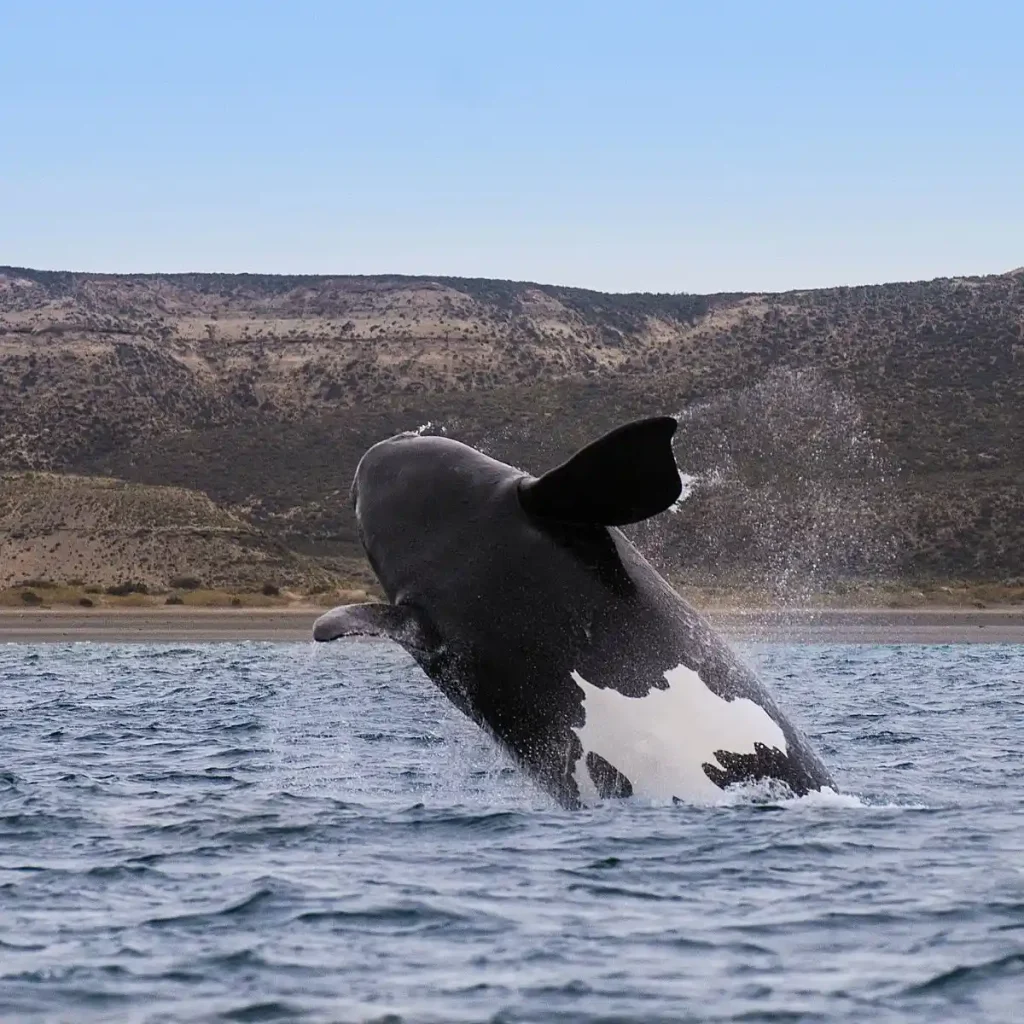
Every year between June and December, Southern right whales migrate to the sheltered waters of Península Valdés in Argentine Patagonia to breed and calve. The result is one of the most accessible whale-watching experiences anywhere: at El Doradillo beach, just 15 km north of Puerto Madryn, you can watch whales from shore as they approach within meters of the waterline. Boat tours from Puerto Pirámides bring you alongside mothers and calves at regulated distances that still feel extraordinarily close.
At up to 17 meters long and 80 tons, right whales are unmistakable. They’re also unusually active at the surface — breaching, slapping their tails, and spy-hopping with a frequency that makes photography relatively straightforward. September and October are the peak months, when calf populations are at their highest and whale density in the bay is greatest. The Valdés Peninsula is a UNESCO World Heritage Site partly because of this annual gathering, which represents one of the world’s most significant right whale breeding concentrations.

Magellanic Penguin — colonies of hundreds of thousands
Magellanic penguins return to the same nesting sites every spring with remarkable fidelity, creating colonies that range from thousands to over a million birds. Punta Tombo in Chubut province hosts the largest continental colony in the world — approximately one million penguins at peak season — and the walkways through the nesting grounds let you observe birds at arm’s length in ways that feel almost surreal. On the Chilean side, Isla Magdalena near Punta Arenas holds around 120,000 birds and is accessible by boat from the city.
The breeding season runs from September through March, with November and December offering the most activity — chicks are present, both parents are feeding actively, and the social dynamics of the colony are at their most intense. By April the beaches empty as birds migrate north into the South Atlantic.
For a full breakdown of the best penguin-watching locations across South America — including species beyond Magellanic — see our complete guide to South American penguins.

Orca — the beaching hunters of Punta Norte
Punta Norte, on the northern tip of Península Valdés, is one of only a handful of places in the world where orcas intentionally beach themselves to catch prey. The behavior — orcas launching themselves onto the shore at high speed to snatch sea lion pups — was first documented here and is deeply tied to this specific location. A small, highly studied population of orcas visits the peninsula between February and April when sea lion pups are learning to swim in the shallows.
Viewing requires patience and good timing with tides and seal pup activity. The lookout points above the beach at Punta Norte are the standard observation posts, and park rangers can advise on the best windows. It’s a genuinely rare wildlife behavior and one that draws dedicated wildlife photographers from around the world.
South American Sea Lion — colonies along the entire coast
Sea lions are among the most abundant and reliably visible Patagonia animals along the Atlantic coast. Large colonies establish at Punta Norte and Caleta Valdés on the Valdés Peninsula, in the Beagle Channel near Ushuaia, and at multiple points along the Patagonian coastline. Adult males can weigh over 300 kg and are visibly dominant during the breeding season (December–February), when they defend territories with considerable noise and aggression.
Boat tours along the Beagle Channel from Ushuaia pass directly by rock colonies where hundreds of animals rest, vocalize, and occasionally enter the water alongside the vessel. These are some of the most accessible marine wildlife encounters in Patagonia.

Huemul — the endangered deer on Chile’s coat of arms
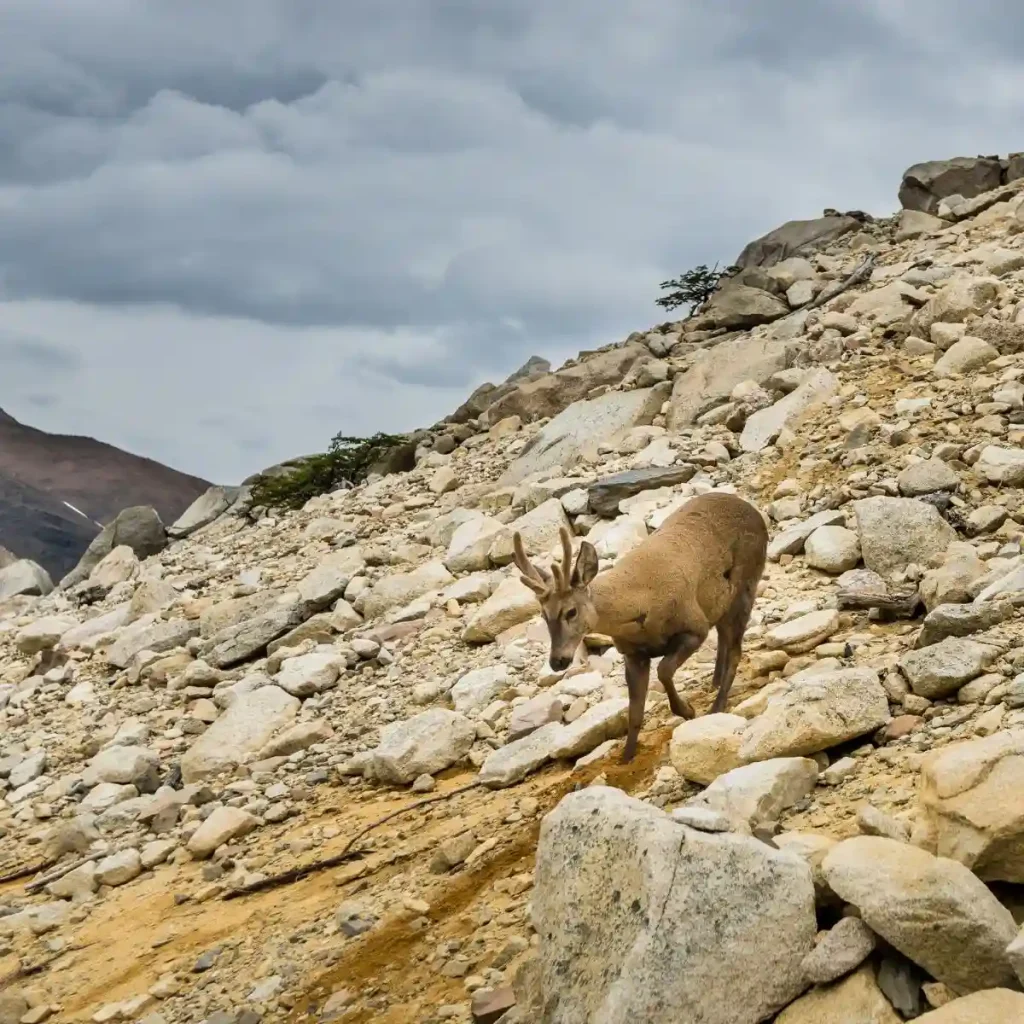
The South Andean huemul appears on Chile’s national coat of arms, which makes its near-extinction all the more poignant. Only around 1,500 individuals remain in the wild, making any sighting genuinely rare and significant. They inhabit steep Andean terrain and dense forest edges, and their shyness makes them difficult to approach.
Torres del Paine (particularly the Valle del Francés and the sector around Lago Grey) and Bernardo O’Higgins National Park are the most reliable locations. Dawn and dusk maximize sighting chances. The huemul is one of the strongest arguments for visiting the less-trafficked areas of Patagonia, where human pressure is lower and wildlife is correspondingly less disturbed.
Lesser Rhea (Ñandú) — the Patagonian ostrich
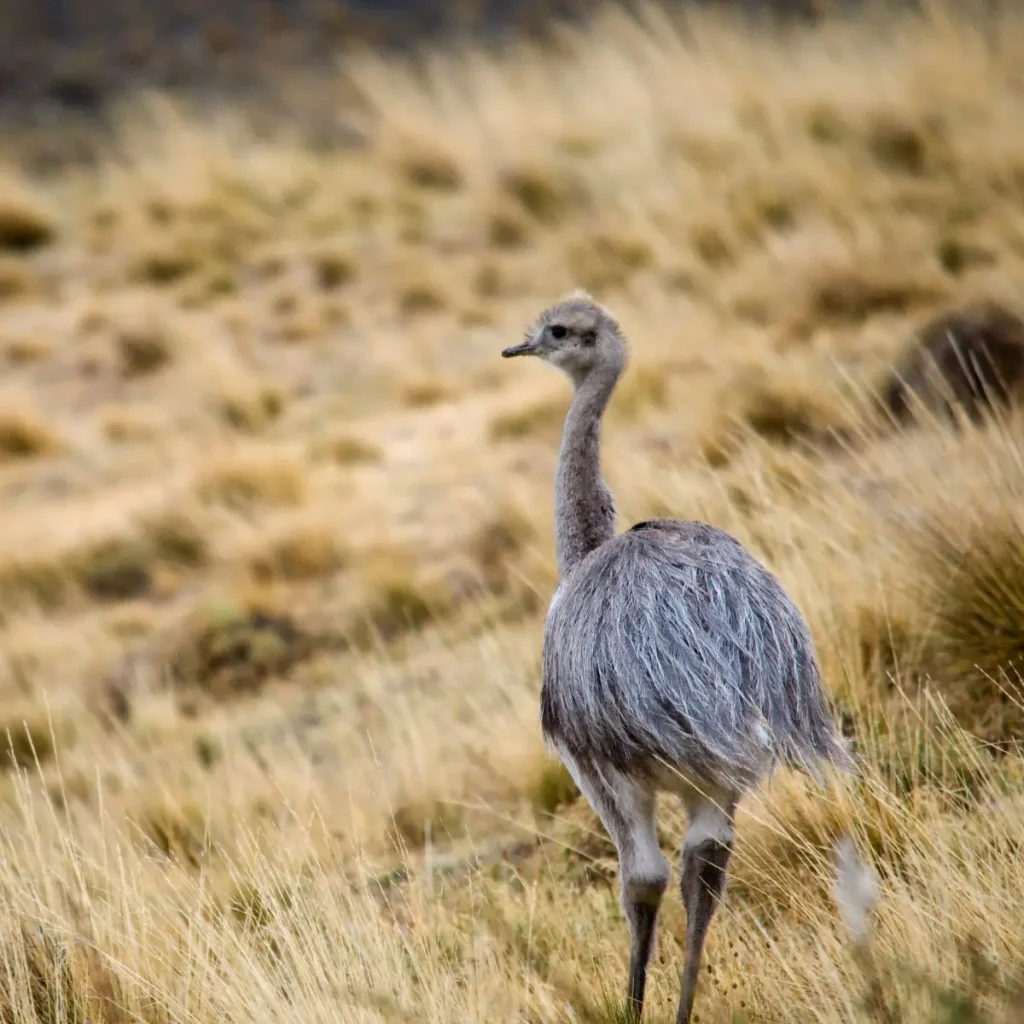
The lesser rhea is one of the most immediately distinctive Patagonia animals for visitors unfamiliar with South American fauna. Standing around 90 cm tall and incapable of flight, these birds roam the open grasslands in groups, often alongside guanacos. Males incubate the eggs and raise chicks entirely alone — a behavioral inversion that surprises most visitors.
They’re essentially ubiquitous across the Patagonian steppe: Route 40, the grasslands around Torres del Paine, and the open terrain around El Calafate all produce reliable sightings. Breeding season runs from September through December, when family groups with small chicks are particularly photogenic.
Commerson’s Dolphin and other cetaceans
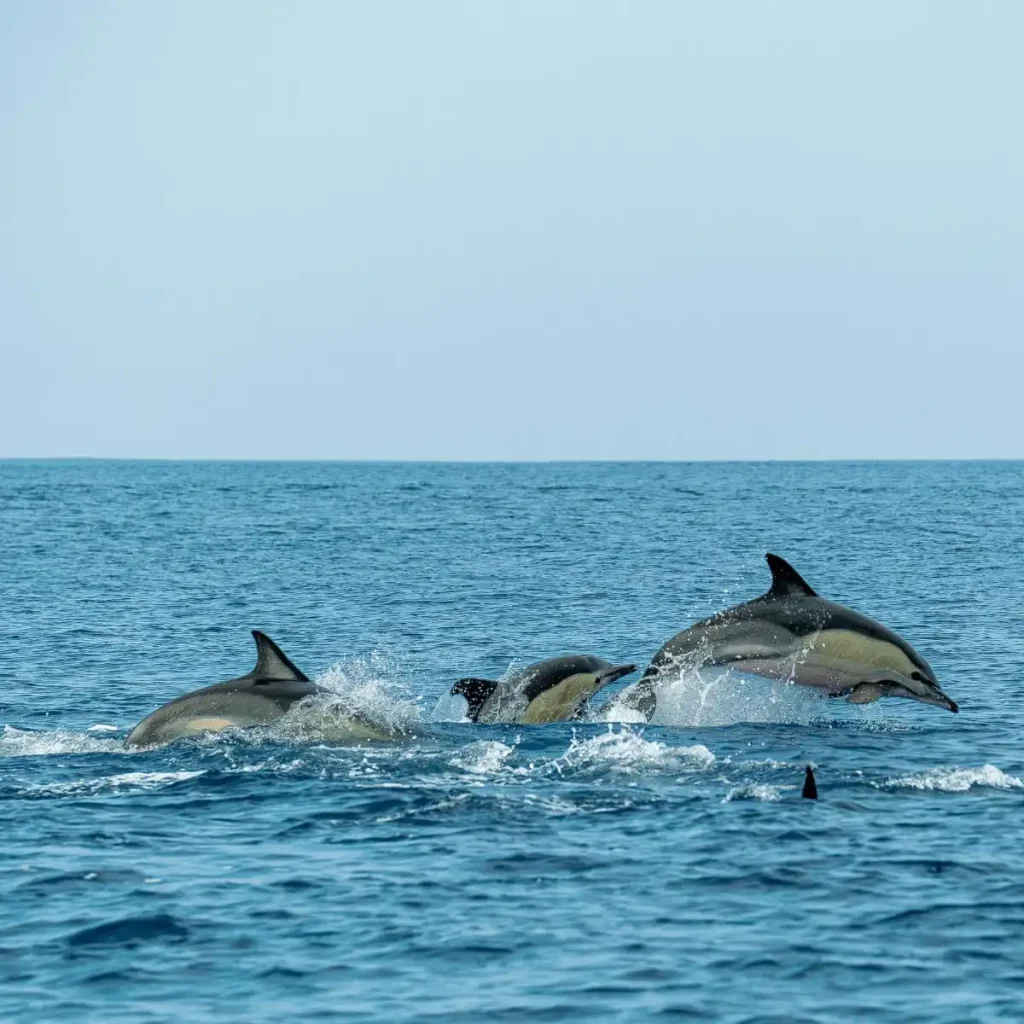
The Beagle Channel between Ushuaia and the Chilean fjords is excellent territory for small cetaceans. Commerson’s dolphins — small, bold, and distinctively patterned in black and white — frequently approach boats and are a highlight of any channel cruise. They’re active year-round and acrobatic enough to photograph even from a moving vessel.
Peale’s dolphins and occasionally Peale’s and hourglass dolphins also appear in the channel, and Magellanic penguins often swim alongside boats in the same areas. Any of the catamaran tours operating from Ushuaia into the Beagle Channel will encounter these animals regularly.
Patagonia Animals by Location — Where to Go for the Best Wildlife
Different corners of Patagonia specialize in different animals. The table below summarizes the key wildlife destinations, the species you’re most likely to encounter, and the optimal season for each.
| Location | Key Patagonia Animals | Best Season |
|---|---|---|
| Torres del Paine, Chile | Puma, guanaco, condor, huemul, gray fox, rhea | Oct–Mar |
| Península Valdés, Argentina | Right whale, orca, sea lion, elephant seal, penguin | Sep–Dec |
| Punta Tombo, Argentina | Magellanic penguin (1M+ colony) | Nov–Dec |
| Los Glaciares NP, Argentina | Condor, guanaco, puma (rare), rhea | Nov–Mar |
| Beagle Channel, Ushuaia | Sea lion, Commerson’s dolphin, penguin, cormorant | Nov–Mar |
| Route 40, Santa Cruz | Guanaco, rhea, gray fox, armadillo | Year-round |
Torres del Paine is the undisputed wildlife capital of the region — no other single destination concentrates so many iconic Patagonia animals in such accessible terrain. If you’re planning a wildlife-focused trip and can only visit one location, this is it.
Península Valdés is the answer if marine wildlife is the priority. The combination of right whales, orcas, elephant seals, sea lions, and penguin colonies within a relatively compact area is difficult to match anywhere on the planet.
When to Visit for Patagonia Wildlife — a Seasonal Guide
The timing of your trip determines which patagonia animals you’ll encounter at peak activity.
November through February is the broadest window of opportunity. Guanacos have calves, pumas are actively hunting in open terrain, penguin colonies are at full population, condors are most visible due to stronger thermals, and the long daylight hours give more time for wildlife observation. This is also peak tourist season, which means Torres del Paine is crowded.
September and October are excellent for marine wildlife. Right whale calf counts are at their highest on Península Valdés, penguin colonies are beginning to fill as birds return from their winter migration, and Torres del Paine is quieter than in January. Temperatures are lower but the wildlife density compensates.
March and April offer the shoulder season advantages: lower prices, fewer crowds, more availability at lodges and campsites. Guanacos are still present in large numbers, condors remain active, and the autumn colors in the beech forests add a visual dimension that summer doesn’t have. Whale season at Valdés extends through December, so those planning a combined trip can include the peninsula in a March itinerary with some residual whale activity.
May through August is low season for most Patagonia wildlife tourism. Many operators close, park access can be restricted, and terrestrial wildlife is harder to observe in harsher conditions. The exception is the early phases of whale season at Valdés, which begins in June.

Dangerous Patagonia Animals — What You Actually Need to Know
Patagonia has a reputation among travelers for being unusually safe wildlife territory, and it’s deserved. There are no venomous snakes of concern to hikers, no aggressive large predators that target humans, and no tropical diseases. The dangerous patagonia animals question almost always comes up, and the honest answer is: the main risks aren’t from animals at all.
Pumas are the apex land predators, but attacks on humans in Patagonia are extraordinarily rare — there are no recorded fatal attacks in the modern tourism era. Pumas tend to avoid humans. If you encounter one on a trail, maintain eye contact, don’t run, make yourself appear large, and back away slowly. The behavior applies universally across cougar/puma range and is effective.
Sea lions deserve more respect than most visitors give them. Adult bulls during breeding season are large (300+ kg), fast, and territorial. Keep at least 10 meters of distance, never position yourself between a sea lion and the ocean, and don’t approach pups even if they appear abandoned — the mother is almost certainly nearby and can be aggressive.
Weather is the real danger in Patagonia and the cause of most evacuations. Wind speeds in Torres del Paine can exceed 120 km/h with no warning, temperatures can drop 15°C in an hour, and storms move in faster than forecasts sometimes predict. Checking conditions before any hike, carrying proper gear, and knowing the location of the nearest refugio is standard practice for anyone spending time in the field.
Patagonia Wildlife Tours — How to Maximize Your Sightings
Self-guided watching of patagonia animals is productive for common species — guanacos, condors, rheas, and gray foxes are visible without any specialist assistance. For target species like pumas, orcas, or huemul, a guided wildlife tour changes the equation significantly.
Specialized puma tracking operations in Torres del Paine typically work with small groups (4–6 people) and employ guides who know individual animals by territory and behavior. The difference in success rates between guided (60–80%) and unguided (10–20%) puma sightings speaks for itself. The same logic applies to whale watching at Valdés, where licensed boat operators follow strict approach protocols that actually bring you closer and more safely than independent attempts.
For travelers who want to design a trip around Patagonia wildlife tours rather than building wildlife into a broader itinerary, the combination of Torres del Paine (terrestrial wildlife, puma tracking) and Península Valdés (marine wildlife, whales and sea lions) covers the broadest range of the region’s iconic animals in a single trip. Our Patagonia wildlife tours can be customized around your target species and travel dates.
Photography Tips for Patagonia Animals
Photographing patagonia animals rewards those who are prepared for variable conditions and long distances. A few practical notes:
The light is exceptional in early morning (6–9 a.m.) and late afternoon (5–8 p.m.) — golden, low-angle, and often dramatic against the mountains. Midday Patagonian light is harsh and flat. If you’re serious about wildlife photography, structure your day around these windows.
For distant subjects like pumas and condors, a telephoto lens of at least 300mm is the practical minimum — 400–600mm is better. For penguin colonies and sea lion beaches where animals approach closely, a 70–200mm range is more useful. Weather sealing matters: Patagonian conditions — wind, rain, sudden temperature changes — are hard on gear.
Cold drains batteries significantly faster than manufacturers’ ratings suggest. Carry at least two batteries per camera for any full-day outing, and keep spares in an inside jacket pocket close to your body to preserve charge.
Conservation and the Future of Patagonia’s Wildlife
The health of Patagonia’s animal populations is directly tied to the integrity of its ecosystems and the management of tourism pressure. Several species face genuine challenges: the huemul remains endangered with a small and fragmented population, Andean condors are near-threatened, and Southern right whales — though recovering — were hunted to near-extinction during the 20th century.
Responsible wildlife tourism plays a meaningful role in conservation outcomes. The economic value of puma sightings, whale watching, and penguin tourism has created financial incentives for protection that pure conservation arguments sometimes struggle to generate. Lodges like those operating puma research programs in Torres del Paine fund scientific monitoring directly through their guiding operations.
Practical responsibility on the ground: maintain the minimum distances recommended by park regulations (100 meters for pumas, 10 meters for sea lions, 30 meters for penguins unless they approach you), stay on marked trails, and follow guide instructions on pacing and noise. These rules exist because habituated animals that lose their natural wariness of humans are more vulnerable, not less.
Planning a wildlife-focused trip to Patagonia? Our team can design a custom itinerary around your target species, travel dates, and preferred travel style. Contact Argentina Pura to get started.

Due to my professional background, I have extensive skills in the identification and characterization of target audiences, which allows me to understand the needs, preferences and specific behaviors of each segment, in order to design effective strategies that contribute to the success of the organization’s communication goals.
I work in the creation of digital content and the design of narratives for companies in the travel and tourism sector, contributing significantly to the promotion of destinations, services and exclusive experiences, generating a positive impact on brand perception.
Throughout my career, I have acquired solid experience in project planning and management, and I am passionate about research and data analysis, especially oriented to the development of user-centric products.
My experience encompasses the development and implementation of sustainable practices in processes, for building solutions that generate positive impact both socially and environmentally.
Always committed to designing effective solutions, I am dedicated to address challenges and contribute to the growth and development of teams and organizations with a holistic and sustainable approach.
0 Comment