




A Patagonia itinerary is arithmetic before it is a map. The region is the size of a country, the towns are hundreds of kilometres apart, and almost every hop between them is a flight rather than a drive. So the first question is not where to go, it is how many days each place needs and how many of those places fit in the time you have.
This guide gives you the numbers to build that answer: the days each base actually takes, the flight time between them, what fits in five, ten, or fourteen days, and what each of those lengths costs. The day by day plans live in their own guides; this one is for deciding which of them you want.
Start with the arithmetic, not the map
Three numbers decide a Patagonia trip: how many bases you visit, how many days each one needs, and how many hours you lose moving between them.
The mistake worth avoiding is the one that looks most efficient on paper. Adding a fourth base to a ten-day trip does not add a fourth region to your holiday. It adds two half days of transit and removes a full day from somewhere else. Below four days in the region you spend more time in airports than in Patagonia.
How many days each base needs
These are the lengths we plan against, and they assume you want the signature day of each place without rushing it.
| Base | Days it needs | Flight from Buenos Aires | What it is for |
|---|---|---|---|
| El Calafate | 3 to 4 | 3 h 20 min | Perito Moreno and the southern glaciers |
| El Chalten | 2 to 3 | By road from El Calafate | Fitz Roy and the walking country |
| Ushuaia | 2 to 3 | 3 h 40 min | The Beagle Channel and Tierra del Fuego |
| Bariloche | 3 | 2 h 15 min | The Lake District, mostly by road |
| Puerto Madryn | 3 to 4 | 2 h 05 min | Whales, penguins, and the Atlantic coast |
El Chalten is the one that surprises people: it has no airport, so it is an add-on to El Calafate rather than a base you fly into. That is why the two are usually planned as one block of five to seven days, and why El Chalten rarely appears on its own in a route. The road between them is the only leg of a southern Patagonia trip that is not a flight, which is part of why the pairing works so well: you gain a second landscape without losing a day to an airport.
The other pairing worth knowing is Bariloche with the Lake District, which sits far enough north that it belongs to a different trip rather than an extension of the southern one. Adding it to a Calafate and Ushuaia route means a long flight back up the country, and that is usually a fourteen-day decision, not a ten-day one.
The flights are the constraint, and one airport catches people out
Every flight above leaves from Aeroparque, the city airport in Buenos Aires, not from Ezeiza, the international one. They are 45 minutes apart in traffic. Booking a long-haul arrival at Ezeiza and a Patagonia departure from Aeroparque on the same morning is the single most common way a Patagonia itinerary comes apart before it starts.
As a rule we leave a night in Buenos Aires between the two, which is why so many trips begin with a city day whether or not the traveller asked for one. It is not padding, it is the transfer.
est justement conçu autour de cela, ou vous pouvez l'intégrer à l'itinéraire de onze jours décrit ci-dessus, où cette traversée est déjà prévue. Dans le cadre d'un voyage de dix jours, cela demande généralement plus d'efforts que cela n'en vaut la peine.
Il en découle une conséquence importante pour la réservation. En haute saison, les liaisons vers la Patagonie sont assurées à une fréquence limitée ; il est donc conseillé de réserver les vols intérieurs bien à l'avance : l'itinéraire s'adapte généralement aux vols disponibles chaque jour plutôt qu'à ce qui semble le plus logique sur une carte.
What fits in five, ten, and fourteen days
Five days. One region, properly. El Calafate with Perito Moreno, or Ushuaia with the Beagle Channel, or Bariloche and the lakes. Five days is enough to do one of them well and not enough to do two: the second flight would eat a fifth of the trip. If Perito Moreno is the image you came for, this is the version that gets you there without a rushed day anywhere. Our five-day route sets it out day by day, including the one flight time it depends on.
Seven days. One region with room to breathe, or two if you accept that the second is a taste rather than a visit. The comfortable version is El Calafate plus El Chalten, which works because the second is reached by road rather than by air. Four nights in Calafate and three in Chalten is the split we use most, and it leaves a spare morning in each for the weather to move.
Ten days. The length we recommend most, and the one where the arithmetic finally relaxes. Two or three bases with a spare morning in each: El Calafate, El Chalten, and Ushuaia is the combination we build most often, and it is the shape of our ten-day Patagonia route, which we set out day by day in its own guide. Ten days is also the first length where a lost day to weather is an inconvenience rather than a hole in the trip.
Fourteen days. Both sides of the Andes, or Patagonia plus one region outside it. This is where Torres del Paine on the Chilean side stops being a stretch and becomes a proper stay, and where you can add Buenos Aires, the falls, or Puerto Madryn and the whales without stealing days from the south. It is also the length at which four bases stop being a mistake.
Longer than that and the question changes from Patagonia to Argentina, which our guide to what a Patagonia trip costs breaks down region by region.
What each length costs
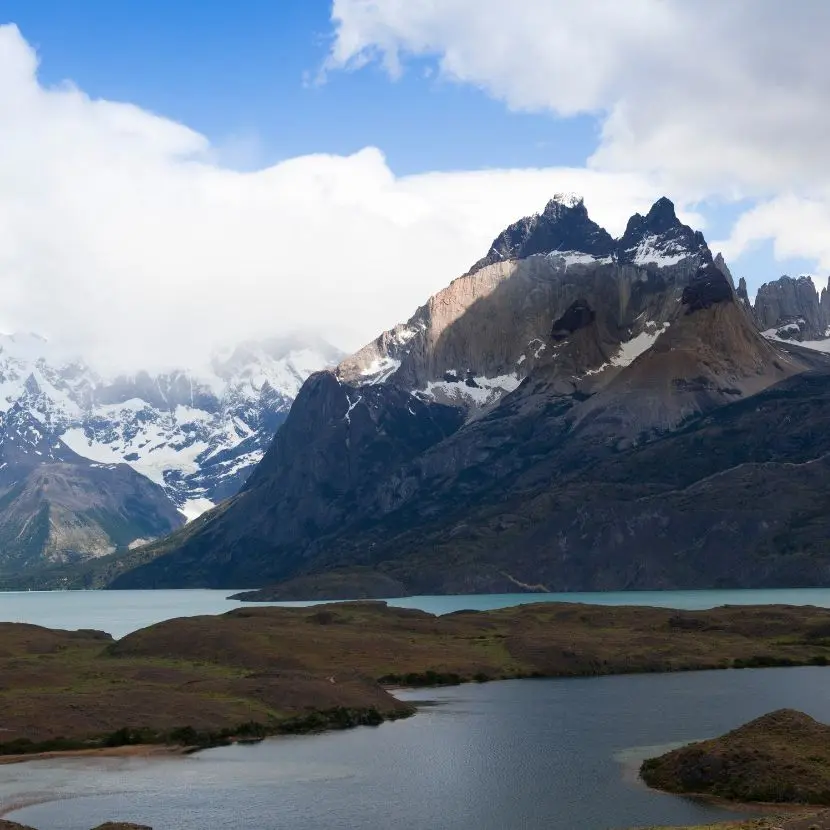
Les sommets spectaculaires du parc national des Torres del Paine, en Patagonie chilienne.
| Voyage | Jours | Itinéraire | De | Par jour |
|---|---|---|---|---|
| Calafate and the Moreno Glacier | 3 | El Calafate · Perito Moreno | 177 € | 59 € |
| Ushuaia at the end of the world | 5 | Ushuaia · Terre de Feu | 1.032 € | 206 € |
| Patagonia 10-Day Trip | 10 | El Calafate · El Chalten · Ushuaia | 1.674 € | 167 € |
| 11-Day Patagonia Tour | 11 | El Chalten · Ushuaia · El Calafate · Puerto Natales | 3.939 € | 358 € |
| Buenos Aires to Patagonia and beyond | 17 | Buenos Aires · El Calafate · El Chalten | 4.426 € | 260 € |
Prices show in euros or in US dollars depending on where you are browsing from.
The per-day column is the one worth reading. It does not fall steadily with length, it moves with what the days contain: the ten-day route costs less per day than the five-day one because its days are simpler, and the eleven-day one costs more than both because it crosses into Chile and adds Torres del Paine. Length is not the price driver. Content is.
Which way round to do it
The order of a Patagonia itinerary matters less than most people expect, with one exception: the return flight. Long-haul departures from Buenos Aires cluster in the evening, so the last Patagonian leg wants to be a morning flight with a margin behind it, not an afternoon one that leaves you sprinting across the city between airports.
That single constraint tends to settle the order. If Ushuaia is on the list it usually goes in the middle rather than at the end, because it is the furthest south and the most exposed to weather delays. El Calafate makes a better final base: more frequencies, a shorter hop, and the glacier is a good last day.
Working north to south has one advantage worth mentioning. Buenos Aires at the start absorbs the jet lag on flat ground before any of the walking begins, which is the same reason we treat the first day as a slow one on almost every itinerary.
Argentina, Chile, or both
Most of what people picture as Patagonia sits on the Argentine side: Perito Moreno, Fitz Roy, Ushuaia, the lakes. Torres del Paine is Chilean, and it is the one highlight that justifies a border crossing.
The crossing is two hundred and seventy kilometres and about five and a half to six hours door to door, roughly one of them at the border posts, which is why we suggest it from fourteen days upwards, where you cross once and keep going rather than doubling back. Our fourteen-day route is built around exactly that, or you can take it as part of the eleven-day route above where the crossing is built into the plan. On a ten-day trip it usually takes more than it gives.
When to go, and how it changes the length
November to March is the southern summer: warmest, longest days, busiest walkways. October, November, March, and April are the shoulder months, and they are quieter without being cold. Our guide to la meilleure période pour visiter la Patagonie goes through the trade-offs month by month.
Season affects length in one practical way. In high summer the days are long enough that a base can absorb an extra activity, so seven days covers more ground than the same seven days in April. In winter the shorter daylight and reduced schedules make the same itinerary feel tighter.
Getting there, and what to read next
If you are still working out the flights into the region rather than the route inside it, our guide on Comment se rendre en Patagonie ? covers the routes and the connections.
When you have decided on a length, the day by day version of your Patagonia itinerary is the next thing to read, and each length has its own. And if you would rather have the route drawn for you, our Voyages en Patagonie page lists every trip with its days, route, and price, and each one is private and adjustable rather than a fixed departure.
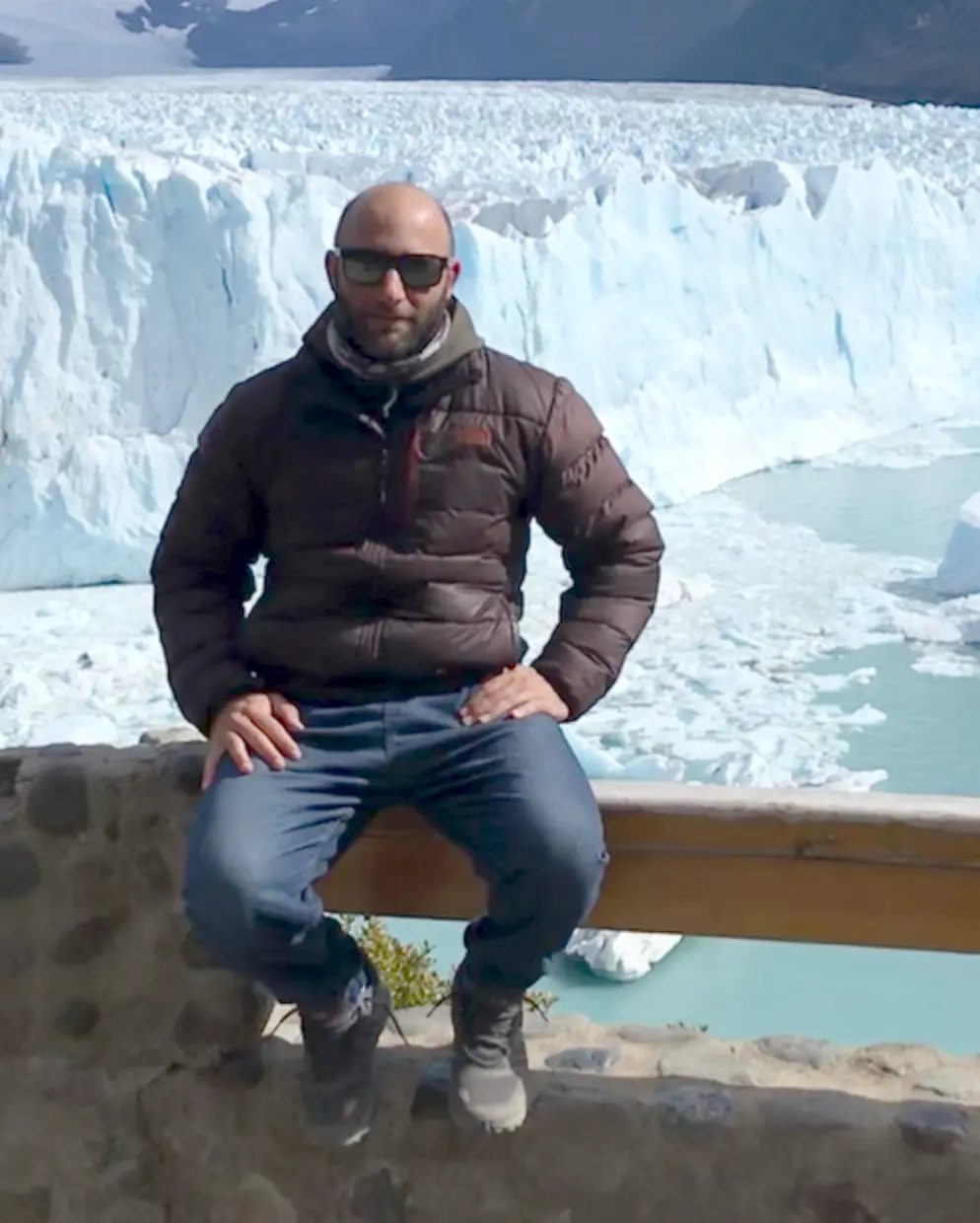
J'ai commencé ma carrière professionnelle dans le monde du voyage en 2003, lorsque j'ai obtenu mon diplôme à Esuela La Suisse à Buenos Aires, mais ma passion pour le voyage remonte à mon enfance, lorsque j'ai commencé petit à petit à développer mon esprit d'aventure et mon amour de la nature.
Je suis passée par différentes entreprises de voyage avant de créer la mienne en 2008. Des expériences qui m'ont permis d'apprendre à connaître les voyageurs, les attentes des différents profils et d'apprendre à connaître l'Argentine et la région comme ma poche.
En créant Argentina Pura, mon plus grand désir est de pouvoir collaborer aux rêves d'autres personnes, d'apporter ma contribution à la transformation du tourisme en une activité véritablement durable qui collabore au développement des localités d'origine et favorise en même temps leur croissance économique.
Argentina Pura est la combinaison de la créativité, de la responsabilité et de la maturité dans mon monde de voyage.

0 Commentaire