





Puerto Iguazú hingegen bietet Direktverbindungen zu fünf Orten, von denen keiner in Patagonien liegt. Wenn Sie in Ihren zehn Tagen sowohl die Wasserfälle als auch einen Gletscher besuchen möchten, verbringen Sie einen ganzen Tag mit einem Umstieg in Buenos Aires. Das ist kein Planungsfehler. So ist die Karte nun einmal.
So an Argentina itinerary 10 days long is not really a choice between places. It is a choice between flight legs, and once you have picked the legs the places follow. What follows is that arithmetic, the three routes it produces, and the dates and times that decide whether each one holds together.
Ten days is nine nights, and each region change costs one
Start with the honest count. A ten-day trip is nine nights on the ground, and the first and last of them belong to the long-haul flight rather than to Argentina.
A change of region costs a day, not an hour. You leave a hotel in the morning, cross a city to an airport, fly, cross another city, and arrive somewhere in the afternoon with an evening left. Do that twice and you have spent two of your nine usable days moving. Do it three times and the trip becomes a tour of departure gates.
That is the whole constraint, and it lands in the same place: ten days holds three regions comfortably, four with something lost, and two if you would rather go deep than wide. Our page on 10 day trips to Argentina lists the published routes that sit inside that limit.
| Route | The three regions | Domestic flights | Published version |
|---|---|---|---|
| The classic | Buenos Aires, El Calafate, Iguazu | Three, one a connection | untersucht, was sich geändert hat, als die Devisenkontrollen aufgehoben wurden. Die Aufenthaltsdauer an sich ist nahezu neutral. Die Fixkosten für die Ein- und Ausreise nach bzw. aus Argentinien verteilen sich auf die gesamte Anzahl der Übernachtungen, sodass ein zehnter Tag in der Regel pro Tag weniger kostet als der neunte. Unsere Aufschlüsselung von 2.885 € |
| The lakes | Buenos Aires, El Calafate, Bariloche | Two, both direct | Ten days, from 1.317 € |
| Der Norden | Buenos Aires, Iguazu, Mendoza | Three, all direct | Eleven days with the glacier added |
Most domestic flights route through Aeroparque
Buenos Aires has two airports, and they do different jobs. Ministro Pistarini, which people call Ezeiza and airlines call EZE, is where the long-haul flights land, about 31 km and an hour from a hotel in the centre. Jorge Newbery, which people call Aeroparque and airlines call AEP, sits on the river inside the city, about 10 km and half an hour from the same hotel, and it is where most of the domestic network departs from.
The two are about 45 minutes apart in traffic. That gap is the single most common way a ten-day Argentina trip loses a morning it had counted on: a long-haul arrival at one airport and a domestic departure from the other on the same day is a plan with no slack in it at all.
The structural consequence is bigger than the transfer, though. Because the network is built around Aeroparque, moving between two regions usually means flying back to Buenos Aires and out again, even when the two regions are nowhere near it. On paper it looks like one flight. In practice it is a day.
The direct links that skip Buenos Aires, and how often they run
There are exceptions, and they are worth knowing precisely, because a ten-day route that uses one of them gets a free day and a route that assumes one that does not exist loses a day.
| Leg | Direct flights a week | In the air |
|---|---|---|
| Buenos Aires (AEP) to Mendoza | About 77 | 2 h |
| Buenos Aires (AEP) to Bariloche | About 65 | 2 h 25 |
| Buenos Aires (AEP) to Iguazu | About 37 | 1 h 55 |
| El Calafate to Bariloche | Three | 1 h 45 |
| Puerto Iguazu to anywhere in Patagonia | Keine | Connect in Buenos Aires |
Read the bottom two rows together and the shape of the whole trip falls out.
El Calafate to Bariloche is a real flight of an hour and three quarters, and it is the one link that lets a ten-day route hold Patagonia and the Lake District without doubling back. It runs three times a week, on one airline, with a morning departure. That is not a detail to check later: it is the fixed point the rest of the itinerary is built around, because it means your El Calafate block has to end on one of three specific days.
Puerto Iguazu, on the other hand, has direct service to five places, and none is in Patagonia. If your ten days include both the falls and a glacier, one whole day is a connection through Buenos Aires. That is not a flaw in the planning. It is the map.

Buenos Aires, El Calafate, and Iguazu: the classic ten days
This is the route most people picture, and it works: the city, the glacier, and the falls, three landscapes that could not be less alike.
Two or three nights in Buenos Aires first, which is the right way round, because the long-haul arrival lands at Ezeiza and the city absorbs jet lag better than a national park does. Our Buenos Aires Reisen page has the days worth booking in advance. Then Aeroparque to El Calafate, three hours and twenty minutes in the air, and the airport is 20 minutes from town. Perito Moreno is 80 km from El Calafate, and the version we run reaches the walkways by way of a boat from Bajo las Sombras, 7 km short of them, so you see the ice wall from the water before you see it from the balconies.
Then the leg that costs you. El Calafate to Puerto Iguazu is a connection in Buenos Aires, most of a day, and it buys two nights at the falls: one for the Argentine side, which is 677 sq km of park and three circuits of walkway, set out on our Iguazu Falls trips page, and one for the crossing described further down. Out through Buenos Aires at the end.
Our published version of this shape is nine days rather than ten, von 2.885 €, and the tenth day is the one we would add back in El Calafate rather than at the falls.
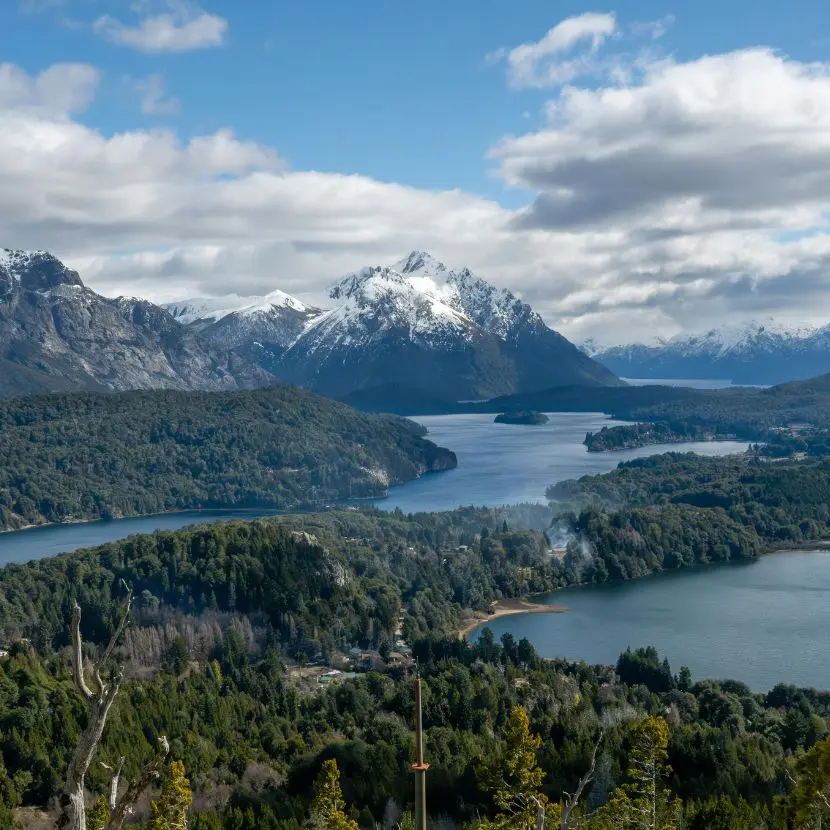
Buenos Aires, El Calafate, and Bariloche: the version with one fewer airport
Swap the falls for the Lake District and the arithmetic changes, because of that three-flights-a-week link.
Three nights in Buenos Aires, two in El Calafate, three in Bariloche, and a last night back in the city before the flight home. The El Calafate to Bariloche leg goes direct, so the transfer day is a morning rather than a day, and the hour you save is an hour on the ground somewhere worth being.
Bariloche is the reason to consider this over the classic: it is the softest of the Argentine landscapes and the easiest to spend three unstructured days in, with the lakes, the forest of arrayanes at Llao Llao, and the Enchanted Valley 80 km out along the Limay. Our Bariloche trips page has the individual days.
This is the shape of our 10-day family route, von 1.317 € with three-star hotels, which is the least expensive ten days on the site by a wide margin, mostly because it uses two domestic flights instead of three and none of them is a connection.
Buenos Aires, Iguazu, and Mendoza: ten days without Patagonia
The third shape leaves the south out entirely, and it is the one that surprises people who assumed Argentina meant glaciers.
Three nights in Buenos Aires, three at Iguazu, three in Mendoza, one back in the city. The three legs are direct flights of about two hours from Aeroparque, which makes this the lightest of the three routes in transfer time even though it covers a subtropical rainforest and a high desert.
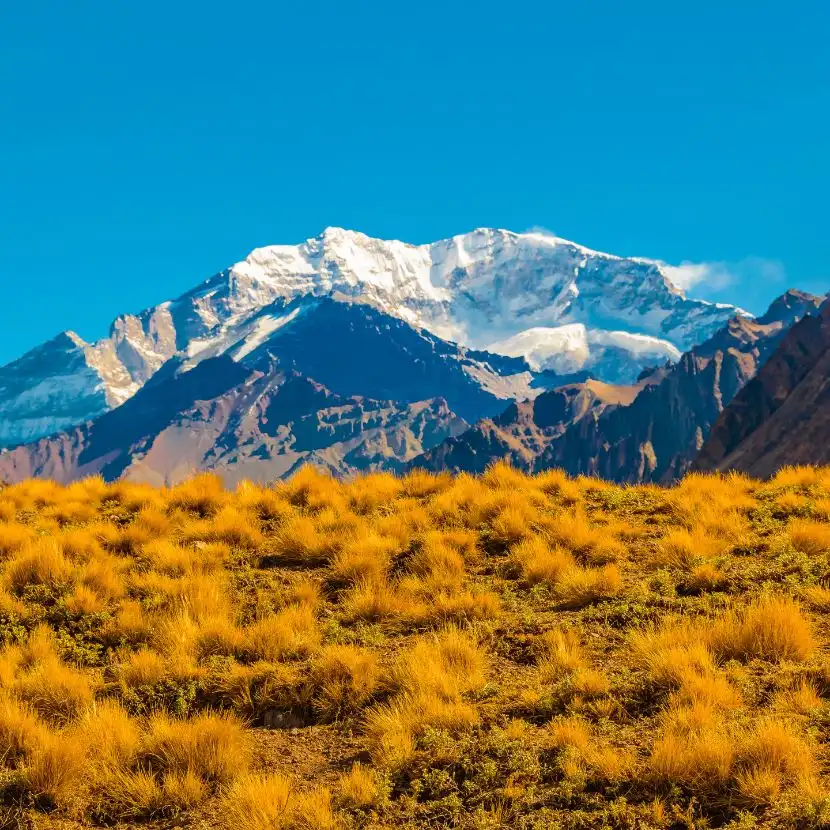
Mendoza is a wine region at the foot of Aconcagua, and the days there are vineyards, an Andean drive, and long lunches rather than trails, which is why it pairs well with the falls: neither block asks much of your legs. Our Mendoza trips page lists the wine days and the mountain ones separately.
Unser 11-day classic route is this itinerary with El Calafate added at the end, from 3.276 €, and the eleventh day is what the glacier costs.
What an Argentina itinerary 10 days long will not hold
Four things come up in most conversations about a ten-day trip, and if you are still deciding which regions make the cut, our guide to how many days each region needs is the place to start, and it is fairer to name them now than to discover them at the planning stage.
Ushuaia and Iguazu in the same ten days. They are at opposite ends of a country 3,700 km long, with no route between them that avoids Buenos Aires. One or the other.
El Chalten as a day trip. It is 220 km north of El Calafate on a road that takes about four hours the way we run it, and the walks that justify the drive are eight hours long. It needs two nights of its own, which a three-region ten-day route does not have. Our Patagonia itinerary guide sets out the lengths at which it does fit, and our ten days inside Patagonia is the route to read if the whole trip is going south.
The northwest. Salta and Jujuy are a region rather than a stop, with the Quebrada de Humahuaca and the salt flats spread across days of driving. Adding them to a ten-day route means dropping something else entirely.
Peninsula Valdes. The wildlife is seasonal, and reaching it is a flight to Trelew plus a road transfer. It belongs to a longer trip, and our two-week Argentina page is where it starts to make sense.
The Brazilian side of the falls, and the paperwork it needs
If your ten days include Iguazu, you will be offered the Brazilian side, and it is worth taking: the Argentine circuits put you inside the falls, and the Brazilian bank, about 2.4 km of viewpoints facing back across the river, is where you see the whole thing at once. It is a half day.
It is also another country, and the entry rules changed. Since 10 April 2025, passport holders from the United States, Canada, and Australia have needed a Brazilian e-visa, applied for online in advance. Our own tour notes advise starting that application about two months before travelling, because a request for extra documentation resets the clock.
Two months is longer than most people leave between booking a trip and taking it, which is exactly why this belongs in the planning conversation rather than the packing list. If the e-visa is not going to arrive in time, the Argentine side alone is still a full day and the itinerary loses nothing structural.
Der Aconcagua ragt über die karge Landschaft von Mendoza empor
The three routes above run from 1.317 € zu 3.276 € for the published versions, and the spread has less to do with length than people expect.
What moves it is the number of domestic flights, the hotel category, and how many of the days are private services with a guide rather than shared departures. The family route is the least expensive of the three because it flies twice, direct both times, and mixes shared days with private ones. The eleven-day route is the most expensive because it flies four times and runs private throughout.
And if the question behind the budget is whether the country is expensive at all, our guide to whether Argentina is cheap to visit works through what changed when the currency controls came off. Length, on its own, is close to neutral. The fixed costs of getting into Argentina and out of it spread across however many nights you stay, so a tenth day usually costs less per day than the ninth did. Our breakdown of what a Patagonia trip costs goes through the parts that sit outside a package, and most of it applies country-wide.
When to go, and the two dates that matter more than the season
Argentina spans about 3,700 km of latitude, so there is no single best month, and a ten-day route across three regions is a compromise between three climates. November to March is the southern summer, which is the window for Patagonia and the busiest time in Bariloche. Iguazu is warm and wet year round and rather more comfortable outside the peak heat of January and February. Mendoza is at its best from February to April, with the harvest at the end of summer.
October, November, and March sit closest to the middle for a route that touches all three. Our guide to Die beste Reisezeit für Patagonien covers the southern end month by month.
Two dates matter more than the month, though. The first is the day of the week your El Calafate block ends, if you are using the Bariloche link. The second is the day your long-haul flight leaves Buenos Aires, because a morning departure turns your last Argentine day into a hotel breakfast and a transfer, and an evening one gives you the day.
Settle those two and the rest of a ten-day itinerary arranges itself. Tell us the dates you are looking at and we will tell you which of the three shapes the flight schedule actually allows that week. Our 10 day trips to Argentina page has the published routes with prices, and if ten days is starting to feel tight, our two-week page is where the same regions get room to breathe.
dort dargelegt., is Argentina safe covers the question that usually comes before the itinerary.
The first two nights of this route are in the capital, and how you spend them is a choice of theme rather than a checklist. Our guide to things to do in Buenos Aires sets it out.
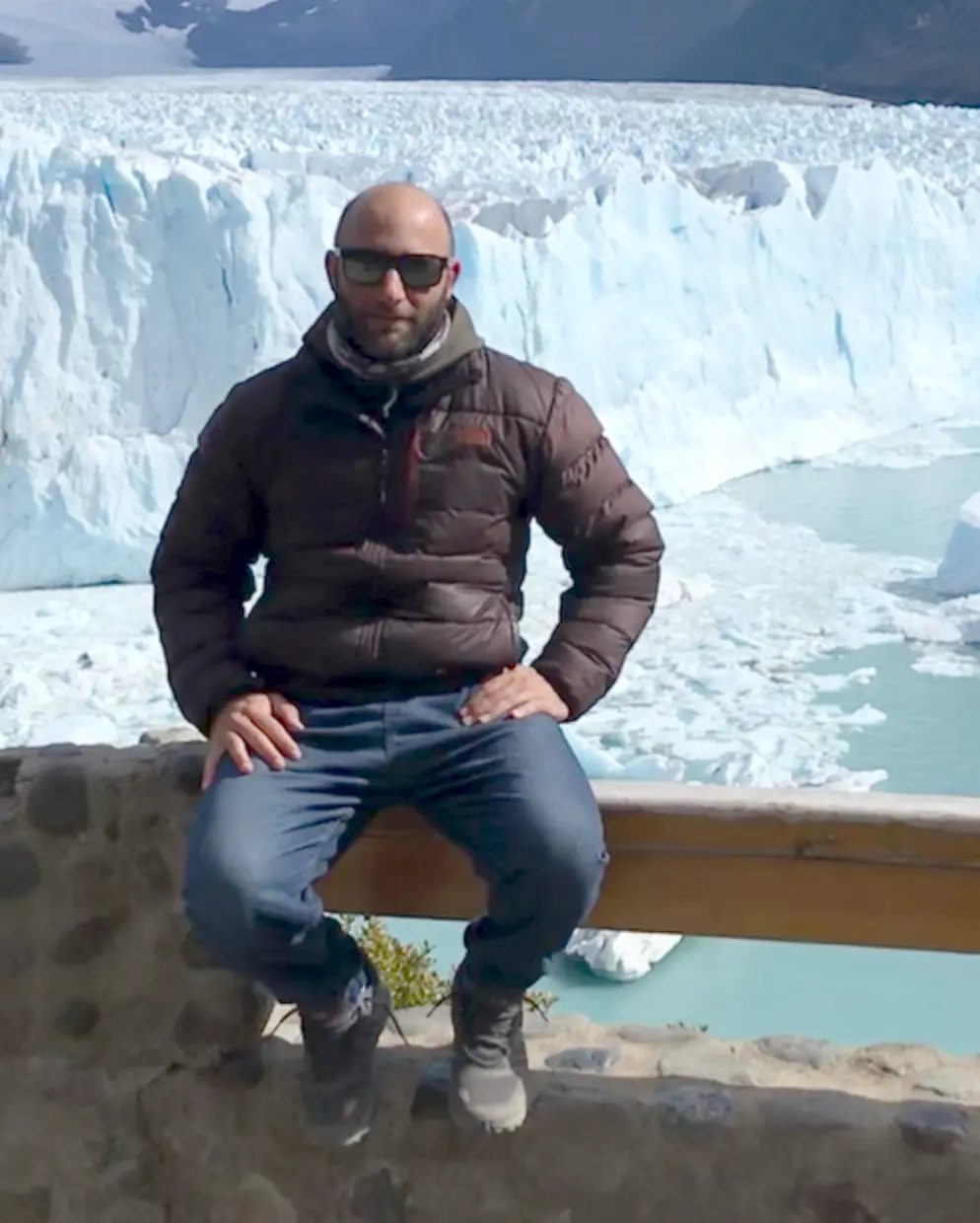
Ich begann meine berufliche Laufbahn in der Welt des Reisens im Jahr 2003, als ich mein Studium an der Esuela La Suisse in Buenos Aires abschloss, aber meine Leidenschaft für das Reisen stammt aus meiner Kindheit, als ich nach und nach meinen Abenteuergeist und meine Liebe zur Natur entwickelte.
Ich habe verschiedene Reiseunternehmen durchlaufen, bevor ich 2008 mein eigenes gegründet habe. Dabei habe ich viel über Reisende und die Erwartungen der verschiedenen Profile gelernt und Argentinien und die Region wie meine Westentasche kennengelernt.
Mit der Gründung von Argentina Pura ist es mein größter Wunsch, mit den Träumen anderer Menschen zusammenzuarbeiten und meinen Beitrag zur Umwandlung des Tourismus in eine wirklich nachhaltige Aktivität zu leisten, die mit der Entwicklung der einheimischen Gemeinden zusammenarbeitet und gleichzeitig deren wirtschaftliches Wachstum fördert.
Argentina Pura ist die Kombination aus Kreativität, Verantwortungsbewusstsein und Reife in meiner Welt des Reisens.
0 Kommentar