





altitudine.
This guide covers the parts that are hard to compare from a brochure: what an activity rating really means on the ground, what a trip of this kind costs, which parts of the map suit a slower rhythm, and the questions worth settling before you pay a deposit.
What an easy pace actually means, in kilometres
Pace is usually described with a word: easy, leisurely, relaxed, gentle. The word is doing a lot of work, and the same one can cover very different days. It is worth asking for the number behind it.
This is how we define the two ratings we use, and the definition is the same one our team plans against:
Easy. Under 3 km of walking a day, on flat ground or boardwalks, with handrails and benches along the route and a vehicle waiting nearby. No stairs without an alternative. A typical Easy day is the Perito Moreno walkways, the Circuito Chico in Bariloche, or the Beagle Channel navigation out of Ushuaia.
Moderato. Three to six kilometres a day, with gentle slopes or uneven gravel underfoot. One main activity in the day, rather than two stacked back to back. A typical Moderate day is Chorrillo del Salto in El Chalten, or the coastal path in Tierra del Fuego National Park.
The second thing to ask is what happens when a Moderate day turns out to be more than you feel like that morning. In our itineraries every Moderate activity has a lower-intensity version of the same highlight: the glacier seen from a boat rather than walked on, Fitz Roy from the viewpoint above the town rather than the full climb to Laguna de los Tres. You keep the day you came for and you choose the version on the day.
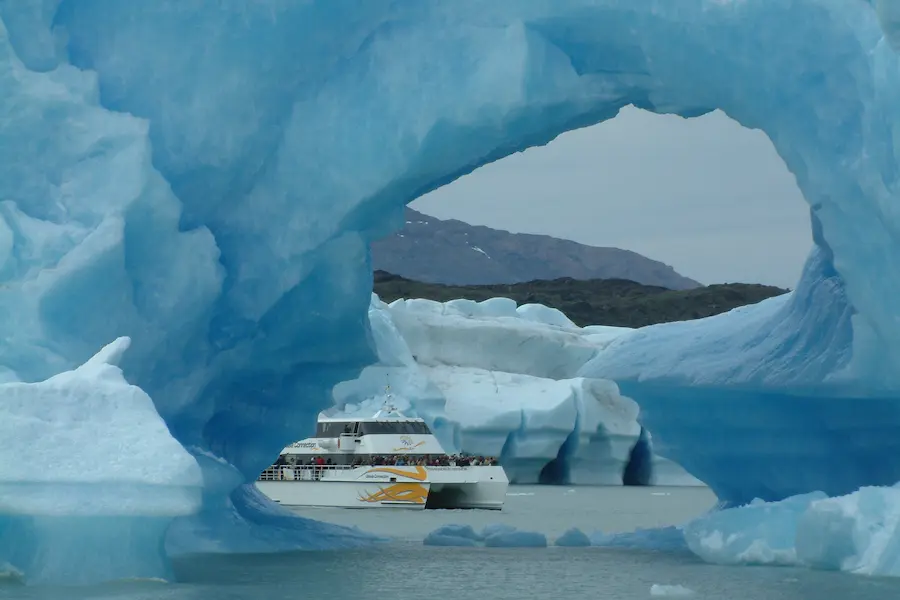
Three kilometres is roughly 40 minutes of unhurried walking with stops. If that sounds comfortable, a great deal of Argentina is open to you, including the two or three images that probably brought you here in the first place.
Richiedi un preventivo
Vi risponderemo entro 24 ore
Group tour, small group, or private: the choice that changes the day
Guided travel for seniors comes in three shapes, and the difference between them is felt hour by hour rather than on the itinerary page.
A large group tour is the most economical and the most fixed. Departure dates are set, the coach leaves when it leaves, and the day is the same for the 40 people on it. It suits travellers who like company and do not mind a schedule.
A small group tour keeps the shared experience and cuts the waiting. Boarding, photo stops, and restaurant service all move faster with a dozen people than with 40, which usually buys back an hour of the day.
A private trip is what we build. The route is yours, the guide is yours, and the start time is a conversation rather than a notice. If you want a slow morning after the flight from Buenos Aires, that is the plan for that day, and the guide is briefed accordingly. For travellers who would rather set the rhythm themselves, this is the option that buys it.
Solo travellers are welcome on all three. On a private trip the single supplement is the one thing worth asking about early, since it is the line that moves most between quotes.
What a senior trip to Argentina costs, with real numbers
It is hard to picture a trip without a number attached to it. These are five of our current routes, with the pace rating and the published starting price per person, so you can see how length, distance, and rhythm move the figure. Prices show in euros or in US dollars depending on where you are browsing from.
| Viaggio | Giorni | Percorso | Ritmo | Da |
|---|---|---|---|---|
| Bariloche Traditional | 3 | San Carlos de Bariloche | Facile | 380 € |
| Patagonia 10-Day Trip | 10 | El Calafate · El Chalten · Ushuaia | Da facile a moderato | 1.674 € |
| Argentina in 9 Days | 9 | Buenos Aires · El Calafate · Iguazu | Facile | 2.885 € |
| 11-Day Patagonia Tour | 11 | El Chalten · Ushuaia · El Calafate · Puerto Natales | Moderato | 3.939 € |
| 17-Day Argentina and Chile | 17 | Buenos Aires · Ushuaia · El Calafate · Puerto Natales · Atacama | Moderato | 6.715 € |
Two things are worth reading off that table. Length matters less than the number of bases: the 10-day Patagonia route costs less than the nine-day trip that adds Buenos Aires and Iguazu, because the second one crosses the country twice. And an Easy rating is not the expensive option. It is a different shape of day, not a lighter version of the same one.
These are starting prices for the published route. What you pay depends on the season, the hotels, and how much of the itinerary we redraw for you, which is why we put the final figure in writing before you decide. For a longer breakdown of what shifts the number, our guide to what a Patagonia trip costs procede regione per regione.
, e se la guida rimane con il gruppo per tutta la giornata o passa il testimone a ogni tappa. Laddove il programma lo consenta, ci avvaliamo della stessa guida di lingua inglese per tutta la giornata, il che, per chi viaggia da solo, fa la differenza tra una serie di transazioni e la compagnia di qualcuno.
Of the questions travellers over sixty ask us before booking, the one about the total is the one most often left half answered by the industry. So here is the line, exactly as it appears on our published routes.
| Item | In the published price |
|---|---|
| Hotels with breakfast, airport transfers, and the excursions named on the itinerary with a guide | Yes, on each route |
| Voli internazionali e nazionali | No. We quote them for you, but they sit outside the price |
| Meals not named on the itinerary | No |
| Entrance fees to national parks, reserves and museums | No, paid on the day |
| Tips, travel insurance and the single supplement | No |
The two lines that move the total most are flights and insurance, and both deserve a sentence. Domestic flights inside Argentina are a real share of the budget on any route with more than one base, and they are the reason we ask for your departure city before we put a figure in writing. Insurance is the line people skip, and for a traveller over sixty in Patagonia it is the one that matters: the policy needs to cover declared pre-existing conditions, medical evacuation from remote areas, and cancellation for medical reasons. A cheap policy that excludes the first of those covers nothing you are likely to claim for.
We put the final figure in writing before you decide, with each line above marked as in or out, so that the number you compare against another operator is the same number you will pay.
Destinations that reward a slower pace
Argentina is a big country and not all of it is equally kind to an unhurried itinerary. These four regions are the ones we recommend most often for travellers who want the highlight without the endurance.
El Calafate and the Perito Moreno Glacier. The most rewarding easy day in the country. The glacier front is visible from the first platform, about five minutes from the car park, and the walkway network descends from there in stages.
Bariloche and the Lake District. The Circuito Chico is a drive with viewpoints rather than a hike, and the chairlift to Cerro Campanario does the climbing for you. Good hotels, short transfers, and a lake in every direction. Our guide to the Lake District of Patagonia covers the route in detail.
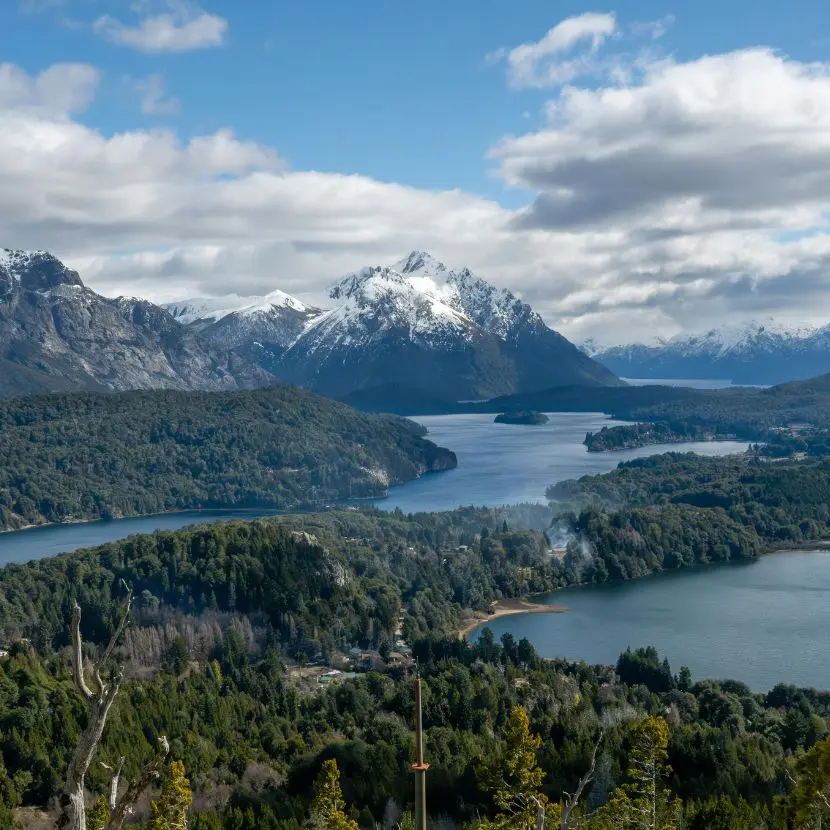
Ushuaia and the Beagle Channel. A morning on the water with sea lions and cormorants, and an afternoon in Tierra del Fuego National Park where the coastal path is flat and you turn back whenever you like.
Buenos Aires. A city of flat neighbourhoods, long lunches, and short taxi rides, which makes it the ideal first and last stop while you adjust to the time difference.
Iguazu deserves a mention with a caveat. The falls are extraordinary and the upper circuit is a boardwalk, but the site involves distance and heat, so we plan it as a full day with an early start and a rest afternoon.
For the same four regions taken one by one, with the walking distance, the ground, and the altitude for each, see our guide to trips for seniors over 60.
Altitude, flying, and the parts of the map worth planning carefully
Two practical points decide more itineraries for our senior travellers than any other.
The first is altitude. Vista panoramica dei laghi e delle cime innevate della Patagonia settentrionale nei pressi di Bariloche.
The second is internal flights. The distances in Argentina are real: Buenos Aires to El Calafate is about 3 h 15 min in the air, and El Calafate to Ushuaia about 1 h 20 min. Where the schedule allows, we keep to one flight every few days and add a night rather than a connection. If you would rather fly less and stay longer in each place, say so at the quoting stage and we will build the route that way.
Travelling solo after 60
Solo travel for seniors is a large part of what we plan, and it is more straightforward here than its reputation suggests. On a private trip you are with a local guide for the parts of the day that involve a road, a boat, or a park entrance, and on your own for the parts that do not. Airport transfers are private, hotels are booked in walkable neighbourhoods, and there is a phone number in Argentina that answers in your language.
The two questions worth asking early are the single supplement, which varies a lot by hotel and season, and whether the guide stays with the group through the day or hands over at each stop. We use the same English-speaking guide through the day wherever the roster allows, which for a solo traveller is the difference between a series of transactions and a companion.
If safety is on your mind, our guide to travelling securely in Patagonia covers the practical side, from taxis to trailheads.
When to go for a gentler trip
October, November, March, and April are our recommendation for a slower Patagonia trip. Days are long enough to be unhurried, temperatures sit between 10 and 20 degrees, and the walkways and hotels are far quieter than in January. November in particular gives you long light and the first colour of the season, which our guide to Patagonia in November covers month by month.
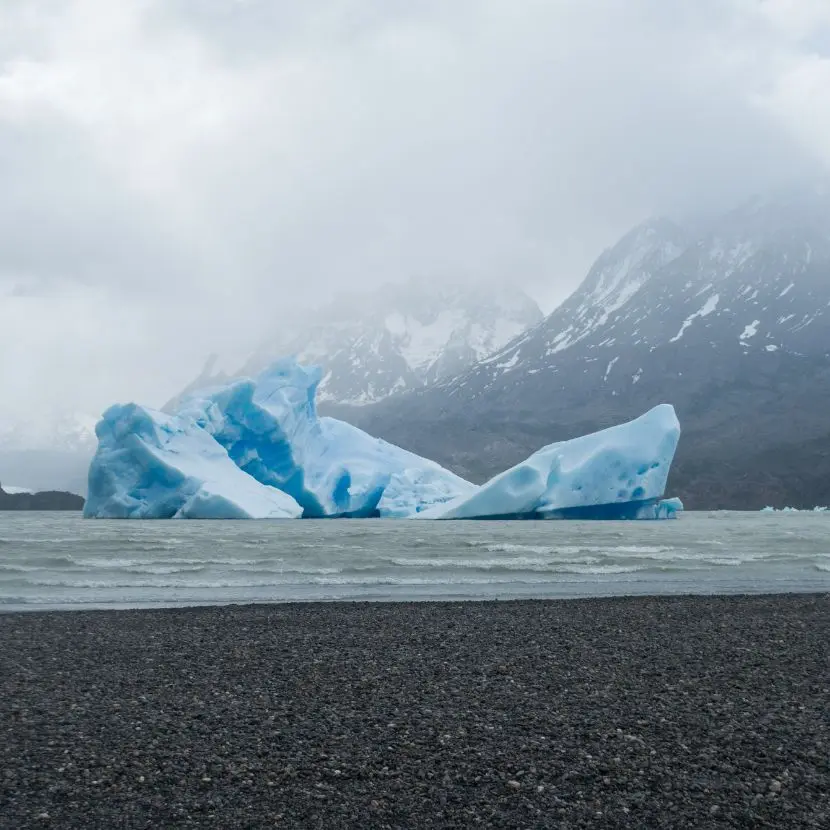
High summer, from late December to February, brings the warmest weather and the busiest walkways. It is a good choice if you are travelling with grandchildren and tied to school holidays, and it is worth booking earlier, since the hotels with lifts and step-free rooms fill first.
Mobility aids, insurance, and the questions worth asking before you book
A handful of questions settle most of the uncertainty, and they are all easier to ask before a deposit than after.
Can you travel with a cane, walker, or wheelchair? Tell us before we build the route and the answer becomes specific rather than general. The Perito Moreno walkways, the Beagle Channel catamarans, and the Circuito Chico are all manageable. The trails around El Chalten and the paths in Tierra del Fuego are not, and we would plan the boat version of those days instead.
Do the hotels have lifts and step-free access? We check this per hotel rather than per category, because a four-star boutique in a converted house can have a beautiful staircase and little else.
What does the insurance cover? Look for pre-existing conditions and medical evacuation specifically, since remote Patagonia is exactly where evacuation cover earns its price. Bring medication in its original packaging with a copy of the prescription in your hand luggage.
How many hours are in a travel day? Ask for the driving and flying time rather than the distance. It is the number that tells you what the day will feel like.
Timing is the last of them. For travel between November and March we suggest booking six to nine months out, mainly because the hotels with lifts and step-free rooms are the first to fill, and those are the ones the rest of the itinerary hangs on.
What is included, and what is settled later? Ask which meals, entrances, and tips are in the price. We price ours in writing before you decide, and if you want to compare like for like, our guide to choosing a tour company in Patagonia sets out what to compare.
How we plan it with you
Every itinerary we build is private, which means the pace is set before anything is booked rather than discovered on day three. We start from three answers: how far you want to walk in a day, how many hotel changes you are willing to make, and which two or three places you would be sorry to miss. The route comes out of those.
If you would like to see what that looks like in practice, our Viaggi in Argentina per anziani page lists the full range with the pace rating and price on every trip, and our Patagonia tours for seniors page goes deeper on the region most people come for. Send us the three answers above and we will come back with a route and a price in writing.
Ho iniziato la mia carriera professionale nel mondo dei viaggi nel 2003, dove mi sono laureata all'Esuela La Suisse di Buenos Aires, ma la mia passione per i viaggi nasce fin dall'infanzia, quando ho iniziato poco a poco a sviluppare il mio spirito di avventura e l'amore per la natura.
Sono passata attraverso diverse compagnie di viaggio prima di creare la mia nel 2008. Esperienze che mi hanno permesso di imparare a conoscere i viaggiatori, le aspettative che i diversi profili hanno e di conoscere l'Argentina e la regione come le mie tasche.
Creando Argentina Pura, il mio desiderio più grande è quello di poter collaborare con i sogni di altre persone, per dare il mio contributo alla trasformazione del turismo in un'attività veramente sostenibile che collabora con lo sviluppo delle località autoctone e allo stesso tempo ne promuove la crescita economica.
Argentina Pura è la combinazione di creatività, responsabilità e maturità nel mio mondo di viaggi.
0 Commenti