





For about three years, Argentina was the cheapest interesting country in South America, and the reason had nothing to do with Argentina. It was an exchange rate. Visitors arrived with dollars in cash, changed them on the parallel market at nearly double the official rate, and lived like royalty on a backpacker budget.
That is over. In April 2025 the currency controls were lifted, and the official, parallel, and tourist rates converged to within a couple of percent of each other. The arbitrage that made the country absurdly cheap simply stopped existing.
So the honest answer to whether Argentina is cheap to visit is now: cheap in some categories, ordinary in others, and expensive in exactly the ones you flew across the world for. What follows is which is which, with the numbers we can stand behind and a clear note where we cannot.
Most of what you will read on this was written before the change
This is worth saying plainly, because it will save you a bad budget. A large share of the Argentina cost guides in circulation were written between 2022 and 2024, and their central advice was to bring crisp hundred dollar bills and to avoid paying by card.
Follow that advice today and you carry a lot of cash for no gain. The gap between the street rate and the official one has been running at roughly one to three per cent, against the thirty to fifty per cent that made the trick worth doing. Meanwhile foreign cards, which used to be the worst way to pay, now settle at the tourist rate rather than at a penalised official one.
The rule of thumb has inverted. Card for most things, a modest amount of cash for the rest, and no hunting for a better rate, because there is not one to find.
What still costs a fraction of what it does at home
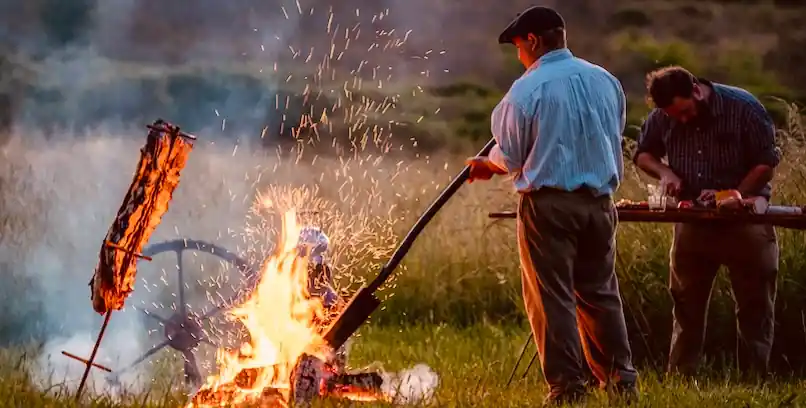
Eating and drinking is where Argentina remains good value, and the gap is large enough that it survives the exchange rate normalising.
A casual dinner with a glass of wine runs somewhere between fifteen and twenty five US dollars a head, and a proper steak dinner with sides and a bottle rather more, closer to forty five. A bottle of Malbec on a restaurant list sits around twenty dollars, and the same bottle from a shop is roughly a third of that. A ride on the Buenos Aires subte is about a dollar. Those figures come from travel budget guides published this year rather than from us, and they move with inflation, so treat them as an order of magnitude rather than a price list.
The category that surprises people is wine. It is not that wine is cheap in the sense of being poor. It is that a bottle you would pay fifty euros for at home is on the list at twenty, which changes how you eat for two weeks.
What a hundred dollars actually buys
It is the question people ask most often, so here it is as a day rather than as a list.
Risposta entro 24 ore, solo da parte di persone in carne e ossa. costs more if you are travelling on your own), covers a full day comfortably: a coffee and medialunas in the morning, a subte ride or two, lunch, a bottle of decent Malbec with a steak dinner in the evening, and a taxi home, with something left over. In El Calafate the same hundred goes noticeably less far, because a resort town in high season prices like one.
Where a hundred dollars stops going far is the moment it meets a fixed cost. It is most of a national park day for two people once you add entry and transport. It is a fraction of a domestic flight. And it is a night in a three-star hotel in Patagonia in January rather than a week of them.
That is the shape of the whole answer in miniature: your discretionary spending stretches, and your structural spending does not.
The month you travel moves the number more than the exchange rate does
One thing that has not changed with the currency reform is that Patagonia has a short season and prices behave accordingly.
November to March is the southern summer and the busiest and dearest window in the south. October, November, March, and April are the shoulder months, and the same route in April can cost meaningfully less on the accommodation line while the walks and the glacier are unchanged. Our guide to il periodo migliore per visitare la Patagonia goes through the trade-offs month by month.
Buenos Aires, Iguazu, and Mendoza behave differently again, so a route that crosses three climates rarely has a single cheap month. If budget is the deciding factor rather than weather, the shoulder months in the south are where the saving actually sits.
What costs the same as anywhere, and it is the part you flew for
Here is the asymmetry that no budget guide states clearly enough: the things that are cheap in Argentina are the things you consume, and the things that are expensive are the things you travel for.
Domestic flights are the clearest case. The country is about 3,700 km long and most of the network runs through one airport in Buenos Aires, which we set out in our guide to ten days across Argentina. Those seats are priced against demand from a country with a large domestic tourism market, not against your euro, and they are the single largest line in most itineraries after the international flight.
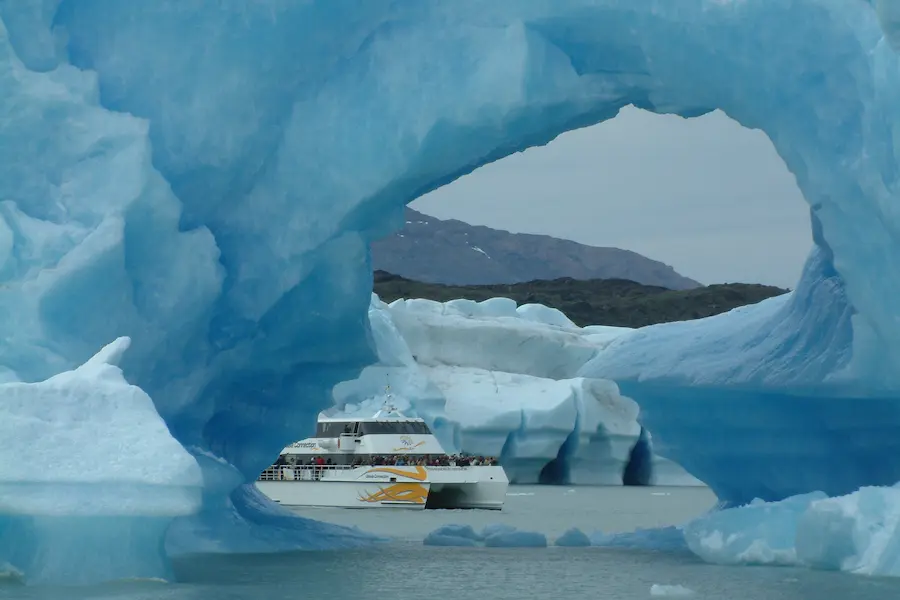
Hotels in El Calafate, El Chalten, and Ushuaia in high season are the second case. Patagonia has a short season, limited beds, and no incentive to discount in January. A three-star room there in February is not a bargain by any standard.
And the third case is the one people discover at the gate.

The gate price a foreigner pays, and the one thing your card will not do
National parks in Argentina charge on a tiered scale, and the tiers are far apart.
| Who you are | Los Glaciares entry |
|---|---|
| Foreign visitor | ARS 45,000 |
| Argentine resident | ARS 15,000 |
| Santa Cruz province resident | ARS 5,000 |
Those rates have been in force since January 2025 and apply to both ends of the park, the Perito Moreno side and the El Chalten side. Iguazu charges foreign visitors the same ARS 45,000. At the exchange rates of this year, that is roughly thirty US dollars a head, per park, per entry.
Thirty dollars is not outrageous for a world-class national park. What catches people out is that it lands three or four times over the course of a trip, that it is per person rather than per booking, and that it sits outside most package prices you will be quoted, ours included.
There is also one practical detail worth more than it sounds: park entry is paid in cash, in pesos, at the gate. Your card, which now works well almost everywhere else in the country, does not help you here. It is the main reason to carry pesos at all, and the reason to arrive in El Calafate with them rather than assuming a machine at the park.
Where Argentina sits among its neighbours now
If you are choosing a country partly on price, the ranking has shifted and it is fair to say so.
, e una guida che afferma il contrario si basa su dati risalenti a due anni fa. no longer the cheapest country in South America, and a guide that says otherwise is working from figures that are two years old.
Le Cascate di Iguazú, uno dei parchi nazionali che applicano una tariffa separata per i visitatori stranieri.
What a guided trip works out at per day
We can be precise about this part, because these are our own published routes rather than someone’s estimate.
| Percorso | Giorni | Da | Al giorno |
|---|---|---|---|
| Family exploration, Buenos Aires, El Calafate, Bariloche | 10 | 1.317 € | about 132 € |
| Patagonia, El Calafate, El Chalten, Ushuaia | 10 | 1.674 € | about 167 € |
| Buenos Aires, El Calafate, Iguazu, private throughout | 9 | 2.885 € | about 320 € |
| Classic Argentina, four regions, private throughout | 11 | 3.276 € | about 298 € |
Read the per-day column rather than the total. The spread from about 130 euros a day to about 320 has almost nothing to do with length and almost everything to do with two things: how many domestic flights the route needs, and whether the days are private services with a guide or shared departures.
Those figures cover accommodation with breakfast, transfers, and the guided days listed on each route. They do not cover international flights, meals beyond breakfast, or the park entries above. Our 10 day trips to Argentina page lists what sits inside each price, and our breakdown of what a Patagonia trip costs goes through the southern half line by line, which is the level of detail this page deliberately does not repeat.
So, is Argentina cheap to visit, and what should you budget
Cheap is the wrong frame now. Predictable is the better one, and Argentina has become a good deal more predictable than it was.
Our working numbers, for a first trip covering two or three regions:
- The trip itself, organised, three-star, with transfers and guided days: from about 130 to 200 euros per person per day, rising to around 300 if you want private services throughout.
- Meals beyond breakfast: twenty five to fifty US dollars a day, depending on whether dinner is a parrilla or a tasting menu.
- Park entries: around thirty US dollars per person per park, in cash, in pesos. Budget for three or four of them.
- The international flight: the largest single number in the whole trip, and the one worth booking first.
What we would not budget for is an exchange rate advantage. Plan at the rate you can see today, pay by card, carry pesos for the park gates and the occasional small vendor, and skip the queue at the exchange houses entirely.
If you would rather see the whole thing priced as one number, tell us the dates and the regions and we will put a figure on it. Our Tour in Argentina page lists the published routes, our guide to ten days across Argentina works through which regions actually fit, and our Viaggi a Buenos Aires e Iguazu Falls trips pages have the individual days with what each one includes.
, e la risposta breve è che si tratta del livello più basso di avviso di viaggio emanato dagli Stati Uniti. whether Argentina is safe, and the short answer is that it sits at the lowest travel advisory level the United States issues.
Ho iniziato la mia carriera professionale nel mondo dei viaggi nel 2003, dove mi sono laureata all'Esuela La Suisse di Buenos Aires, ma la mia passione per i viaggi nasce fin dall'infanzia, quando ho iniziato poco a poco a sviluppare il mio spirito di avventura e l'amore per la natura.
Sono passata attraverso diverse compagnie di viaggio prima di creare la mia nel 2008. Esperienze che mi hanno permesso di imparare a conoscere i viaggiatori, le aspettative che i diversi profili hanno e di conoscere l'Argentina e la regione come le mie tasche.
Creando Argentina Pura, il mio desiderio più grande è quello di poter collaborare con i sogni di altre persone, per dare il mio contributo alla trasformazione del turismo in un'attività veramente sostenibile che collabora con lo sviluppo delle località autoctone e allo stesso tempo ne promuove la crescita economica.
Argentina Pura è la combinazione di creatività, responsabilità e maturità nel mio mondo di viaggi.

0 Commenti