



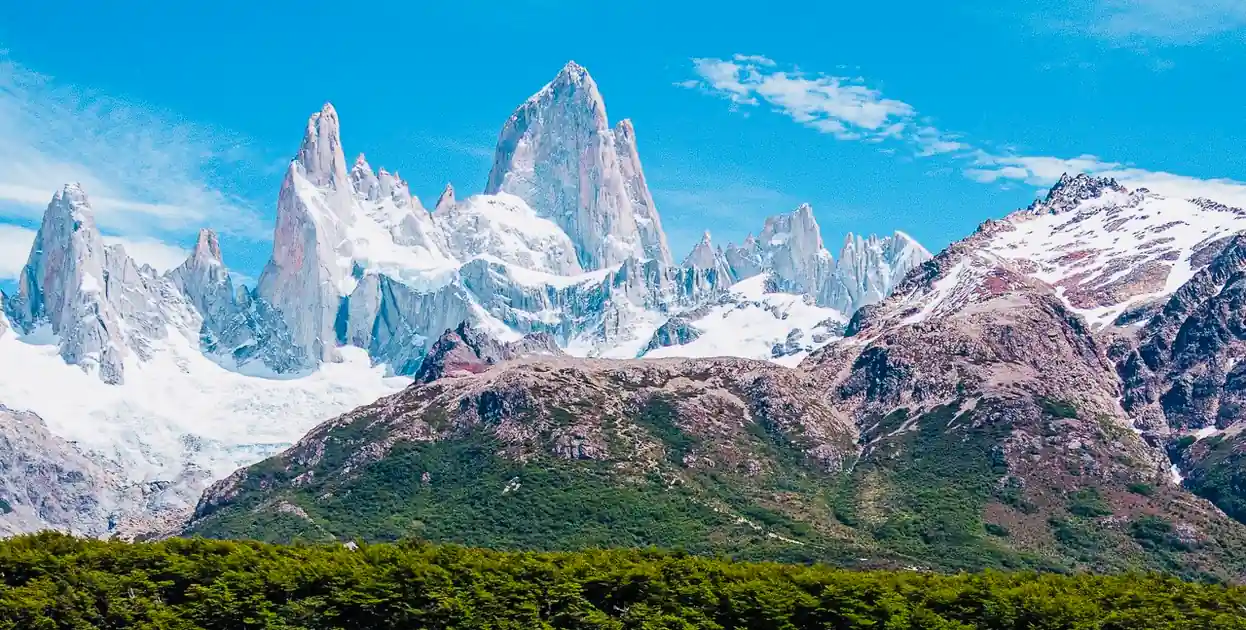

itinerario de cinco días.
What follows is the Argentine version, day by day, as we actually run it: El Calafate, El Chalten, and Ushuaia, with the transfer times, the length of each walk, where you sleep, and what the ten days cost. If you are still deciding on a length rather than a route, our guide to how many days Patagonia needs works through five, ten, and fourteen days side by side.
The shape of the ten days
Three bases, one internal flight, and one road transfer. Two nights in the first, four in the middle, three at the end.
| Días | Base | Nights | What the days hold |
|---|---|---|---|
| 1 to 2 | El Calafate | 2 | Arrival, then the Perito Moreno Glacier |
| 3 to 5 | El Chaltén | 3 | Road transfer, then Fitz Roy and Cerro Torre |
| 6 | El Calafate | 1 | Return by road, free afternoon |
| 7 to 9 | Ushuaia | 3 | Beagle Channel, Fuegian forest, Lake Fagnano |
| 10 | Ushuaia | 0 | Free morning, departure |
The pattern worth noticing is that El Chalten gets three nights while it is not a place you fly into. It is reached by road from El Calafate, which is what makes the pairing work: you gain a second landscape without losing a day to an airport at either end.
Days 1 and 2: El Calafate and the Perito Moreno Glacier
You arrive from Buenos Aires, roughly three hours and twenty minutes in the air from Aeroparque, the city airport rather than the international one. The first day is deliberately empty: a transfer, a hotel, and an afternoon that belongs to you. Long-haul arrivals rarely have a good first day in them.
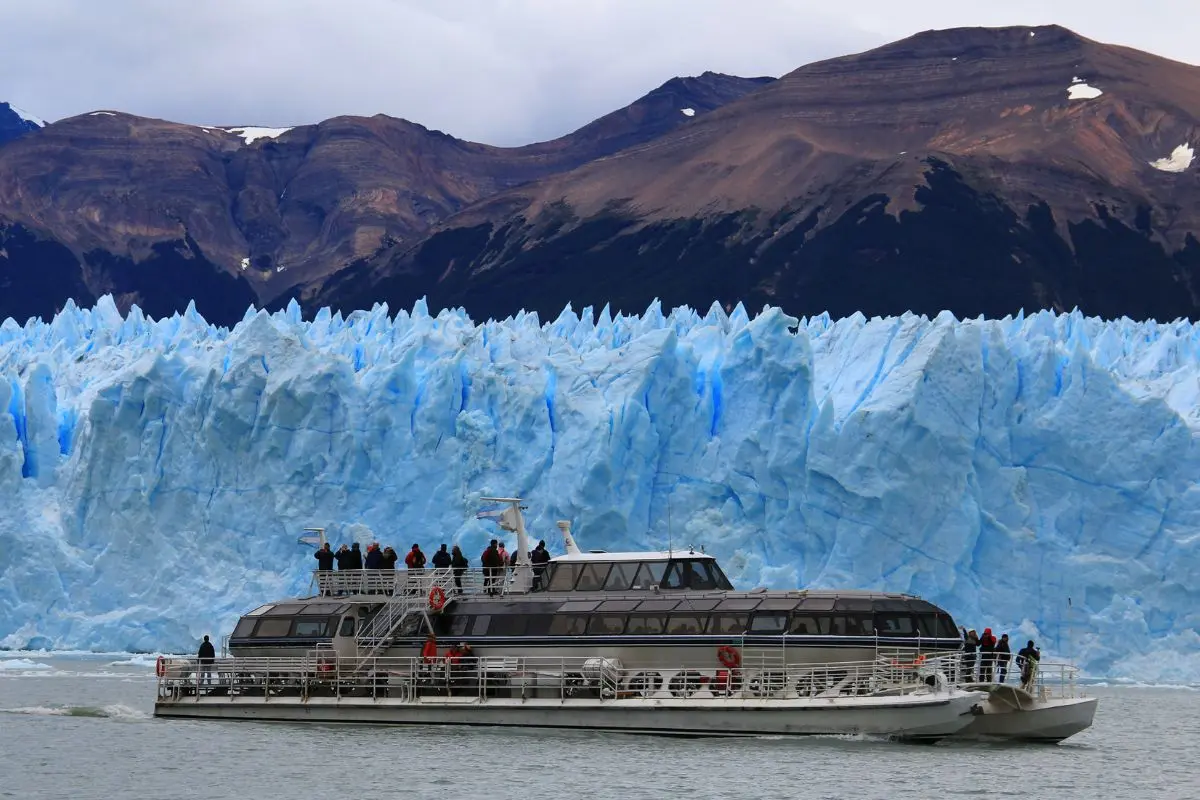
Day two is the glacier, and it is the easiest great day of the whole route. The Perito Moreno front is visible from the first platform, about five minutes from the car park, and the balcony network descends from there in stages, all of it metal walkway with handrails and benches. You choose your own distance: fifteen minutes on the top balcony is a complete visit, two hours on the full circuit is a different day, and both end at the same wall of ice.
The two upgrades worth knowing about are the boat that runs along the glacier face, which is the version we suggest when standing for long is the constraint, and the ice trek across the surface, which needs a reasonable level of fitness and books out early in high season. Neither is in the base price. Our El Calafate trips page lists both with their durations.
One detail that catches people out on day one rather than day two: the flights south leave from Aeroparque, the city airport in Buenos Aires, not from Ezeiza, and the two are forty-five minutes apart in traffic. A long-haul arrival at one and a Patagonia departure from the other on the same morning is the most common way a route like this comes apart before it starts.
Day 3: the road to El Chalten
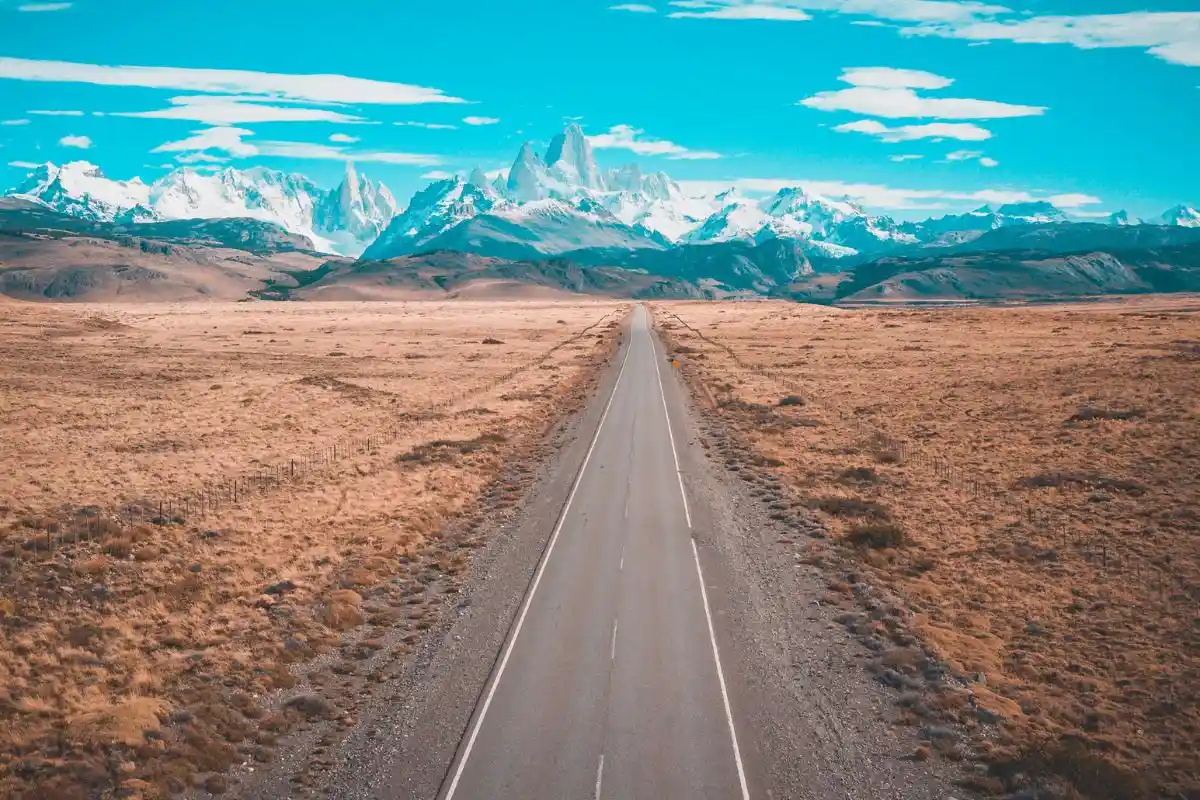
Four hours by road, two hundred and twenty kilometres, with the Fitz Roy massif growing on the horizon for the last hour. We keep it as a daylight transfer rather than an early start for that reason. The practical side of this leg, which way to cover it and where the only fuel stop is, is set out in our five-day route, where the road matters more because there is less slack around it.
You arrive in the afternoon with enough left for Chorrillo del Salto, a flat walk of about an hour to a waterfall on the edge of the village. It is the right size for a day that already had a bus in it, and it gets your legs moving before the two long days that follow.
Days 4 and 5: Fitz Roy, then Cerro Torre
These are the walking days, and they are the reason El Chalten gets three nights instead of two.
Day four is Laguna de los Tres, the classic Fitz Roy viewpoint. Eight hours return at a steady pace, of medium difficulty, with the last hour a steep climb over loose rock that does most of the work of the reputation. The reward is the lagoon directly beneath the tower.
Day five is Laguna Torre, and it is the gentler of the two. Six to seven hours return, low difficulty, mostly flat, ending at a glacial lake with Cerro Torre behind it and icebergs on the water when the season cooperates.
Both are self-guided on this route, which is worth saying plainly: the trails from El Chalten are well marked and busy in season, and a guide is an option rather than a requirement. If the weather closes in, and in El Chalten it can, the order swaps and the shorter walk moves to whichever day looks better. That flexibility is the practical argument for three nights. With two, a bad day costs you Fitz Roy entirely. Our El Chalten trips page has the trail profiles.
Day 6: back to El Calafate
Three hours on the road, in the afternoon, with the morning free. There is a version of this trip that flies out of El Calafate the same evening, and we do not build it that way: a return transfer followed by a flight makes the ninth day of a ten-day trip a travel day, and by then you want a bed rather than another departure gate.
Days 7 to 9: Ushuaia and Tierra del Fuego
The flight to Ushuaia is about an hour and fifteen minutes, and it is the only internal flight in the whole route. What you land in feels like a different trip: mountains that end in the sea, a working port, and a town at the bottom of the map.
Day seven is arrival and the waterfront, with the Beagle Channel navigation as the afternoon option. It is a flat-water catamaran past sea lion colonies and the lighthouse, with seating inside and a deck for when you want it, which makes it the gentlest afternoon of the ten days.
Day eight is Laguna Esmeralda, a moderate walk of about six hours through Fuegian forest and peat bog to a green glacial lake. The peat is the part people are unprepared for: it holds water, and the trail turns to mud for long stretches. Waterproof boots, not trainers.
Day nine is the one people remember, and it is not a walk at all. A 4×4 run over the mountains to Lake Fagnano, a traditional barbecue on the shore, and canoes on the water for those who want them. After two hiking days it lands exactly right.
lo repasa mes a mes.
Puesto por escrito, ese es todo el Plan B: un cambio, un margen de seguridad y una orden. No es complicado, pero tiene que estar listo antes de que sople el viento, por eso lo incluimos en el itinerario en lugar de improvisarlo esa misma mañana. combining Patagonia with Antarctica works through the margin the embarkation date needs. Long-haul departures from Buenos Aires cluster in the evening, so the connection out of Ushuaia wants to be a morning flight with margin behind it. It is the one piece of the route where we would rather lose half a day than run it tight.
What the route asks of you physically
Ten days sounds like a lot of walking. It is four days of it, and the rest is glacier walkways, boats, roads, and a 4×4.
| Día | Walk | Horas | Dificultad |
|---|---|---|---|
| 3 | Chorrillo del Salto | About 1 | Flat |
| 4 | Laguna de los Tres | 8 return | Medium, steep final hour |
| 5 | Laguna Torre | 6 to 7 return | Low, mostly flat |
| 8 | Laguna Esmeralda | About 6 | Moderate, muddy |
That comes to roughly twenty-one hours on foot across ten days, concentrated in three of them. It is the honest version of what the route costs your legs, and it is the number to look at if you are weighing this against a gentler trip. If two long hiking days in a row is more than you want, the variant below drops one of them without changing anything else.
Nothing on the route is exposed or technical. The Fitz Roy walk finishes on loose rock at a gradient that people remember, and the Esmeralda trail crosses peat that holds water for stretches, but both are marked paths walked by hundreds of people a day in season.
When the wind closes a trail: what actually happens
The fear that sits under most questions about Patagonia is that the weather will take the day you came for. It is a fair fear, so here is what it looks like in practice on this route, and how the ten days absorb it.
What closes: in El Chalten the rangers shut the upper trails when the wind rises, which happens a few days a month in season, and the Laguna de los Tres climb is the first to go. In El Calafate the boats on Lago Argentino and the glacier navigation are cancelled in strong wind. In Ushuaia the Beagle Channel catamaran stays in port on the worst days. And flights into El Calafate run late more often than they are cancelled.
What does not close: the walkways at Perito Moreno, which face the glacier from solid ground and stay open in almost any weather. The road to El Chalten. The lower trails around the village. The museums, the prison and the train in Ushuaia. There is a full day of Patagonia available on a bad day; it is simply a different day.
- Days 4 and 5 are interchangeable. Fitz Roy and Cerro Torre are two separate valleys. If one is closed, walk the other and swap them. Both need the same fitness and the same start time, so nothing else moves.
- Day 6 is the buffer, not a lost day. The drive back to El Calafate takes three hours. If the wind took a trekking day, the morning of day 6 is a second chance at Laguna Capri or the Condores viewpoint before the road.
- The fixed-time things go first, not last. The glacier boat and the Beagle Channel catamaran are booked for the first possible day at each base, so a cancellation leaves a day to retry. Booking them for the last day is the mistake that turns wind into a missed glacier.
Written down, that is the whole Plan B: a swap, a buffer and an order. It is not complicated, but it has to exist before the wind does, which is why we build it into the itinerary rather than improvising it on the morning.
Why this route stays in Argentina
Torres del Paine is worth seeing, and on a fourteen-day trip we build it in. On ten it takes more than it gives.
The crossing from El Calafate to Puerto Natales is two hundred and seventy kilometres and about five and a half to six hours door to door, an hour of it at the border posts, which on a ten-day trip is two of your ten days spent moving. Our fourteen-day route is the one built to cross once and keep going. What you would drop to make room is Ushuaia, and the trade is a second granite massif in exchange for Tierra del Fuego, the Beagle Channel, and the bottom of the continent. For most travellers on their first Patagonia trip, that is the wrong swap.
If you want both sides, the honest answer is the eleven-day route through Puerto Natales, analiza el mapa de vuelos nacionales para determinar qué tres regiones encajan realmente. ten days across Argentina works through the domestic flight map that decides which three regions actually fit.
What the ten days cost
The route above is our Patagonia 10-Day Trip, and this is what sits inside the price and what does not.
| Item | In the price | Note |
|---|---|---|
| Desde | 1.674 € | Nine nights with breakfast, three-star |
| Al día | 167 € | Lower than our five-day route, because the days are simpler |
| Transfers and airport pickups | Sí | Both bases, both directions |
| Perito Moreno day tour, Laguna Esmeralda, Lake Fagnano 4×4 | Sí | Guided, with transport |
| Flights, meals beyond breakfast, park entrance fees | No | Paid separately, entrances on the day |
The per-day figure is the one worth reading. Ten days works out lower per day than a shorter Patagonia trip, because the fixed costs of getting into the region spread across more nights and because these particular days are walking and boats rather than helicopters. Length is not the price driver here. Content is. Our breakdown of what a Patagonia trip costs goes through it line by line.
Hotels on the base version are the well-run simple ones, Calafate Hostel, Rancho Grande, and Los Cormoranes, and moving up a category is a per-night decision rather than a different trip.
What we would change, and for whom
The route above is the one we build most often, and three variants come up enough to name.
For a slower pace. Drop day five, the Laguna Torre walk, and use the day for the boat on the glacier and an unhurried afternoon in the village. Ten days with one long hike instead of two suits a lot of travellers better than they expect. If the trip has to be shorter rather than gentler, the first five days of this route stand on their own as a five-day itinerary.
For more comfort. The hotel category is the lever, not the route. The days stay as they are.
For photographers. Move the El Chalten block later in the trip so the flexible days sit at the end, where you can spend them waiting for the mountain to clear rather than watching the calendar.
When to go, and when to book
November to March is the southern summer, with the longest days and the busiest trails. October, November, March, and April are the shoulder months, quieter without being cold, and they suit this route well because both walking days benefit from an empty trail. Our guide to la mejor época para visitar la Patagonia goes through it month by month.
Observar la fauna al atardecer en el Canal de Beagle, en Ushuaia.
Every itinerary we build is private and adjustable, so the ten days above are a starting shape rather than a fixed departure. Our Rutas por la Patagonia page lists the full range with days, route, and price, and if you are arriving into the region rather than moving inside it, our guide on Cómo llegar a la Patagonia covers the connections.
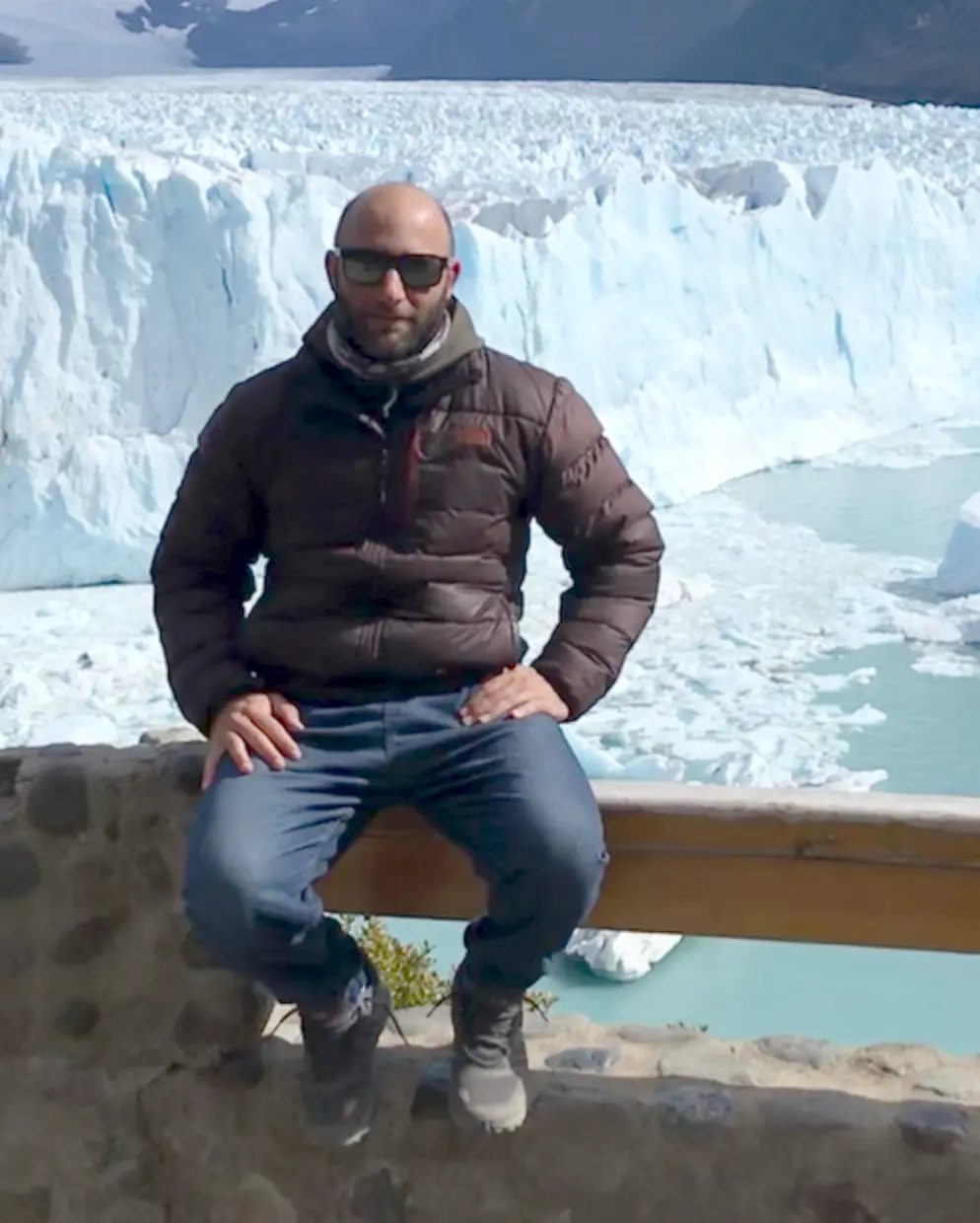
Comencé mi carrera profesional en el mundo de los viajes en 2003 donde me gradué en Esuela La Suisse en Buenos Aires, pero mi pasión por viajar viene desde mi infancia, cuando comencé poco a poco a desarrollar mi espíritu de aventura y amor por la naturaleza.
Pasé por diferentes empresas de viajes antes de crear la mía en 2008. Experiencias que me permitieron aprender sobre los viajeros, las expectativas que tienen los distintos perfiles y conocer Argentina y la región como la palma de mi mano.
Al crear Argentina Pura, mi mayor anhelo es poder colaborar con los sueños de otras personas, hacer mi aporte a la transformación del turismo en una actividad verdaderamente sustentable, que colabore con el desarrollo de las localidades nativas y a la vez promueva su crecimiento económico.
Argentina Pura es la combinación de creatividad, responsabilidad y madurez en mi mundo de viajes.
0 Comentarios