



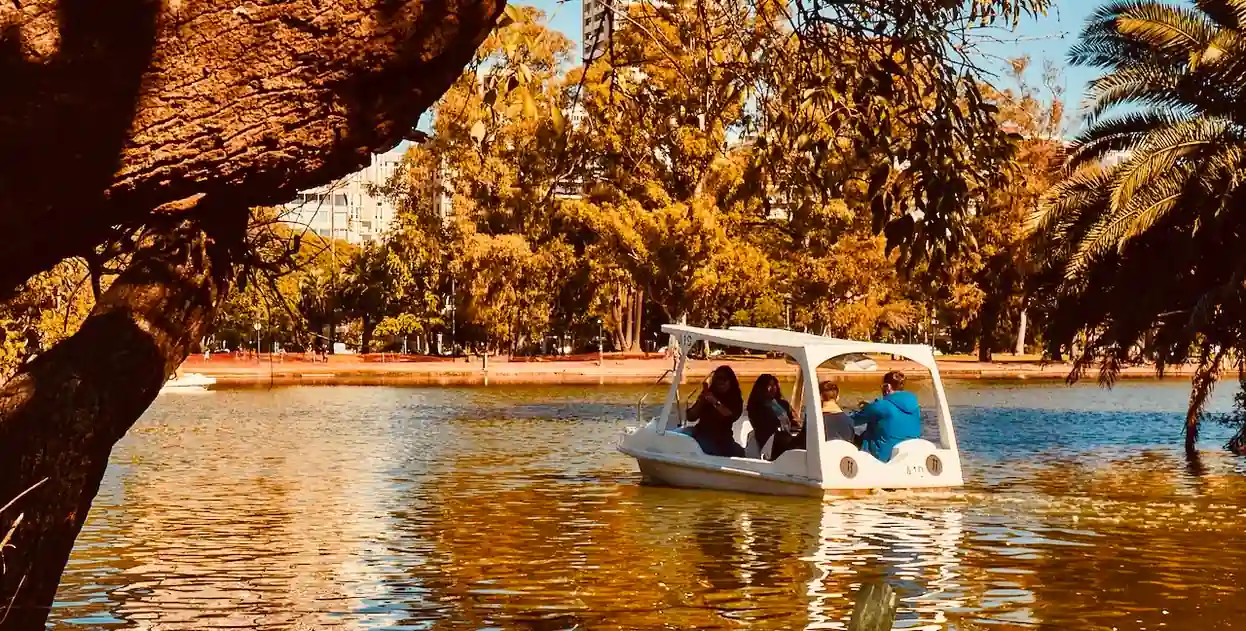

se basan en hoteles que hemos visitado personalmente.
This guide is the version of that answer we give when we build a route, rather than the version the hotel listings give. It ranks the neighbourhoods by the trip you are making, names the streets the government advisories flag so that safety stops being a vague worry, and ends with the one comparison people ask us about by name: Recoleta or Palermo.
The five Buenos Aires neighborhoods visitors actually sleep in
The city has forty eight official barrios. Visitors sleep in five of them, and the choice among those five is the whole decision. The last column matters more than it looks: Aeroparque, the domestic airport, sits on the river at the edge of Palermo, so where you sleep decides how early you get up for the flight to Patagonia or Iguazu.
| Neighbourhood | Who it suits | The trade-off | To Aeroparque |
|---|---|---|---|
| Palermo | Four days or more, food and evenings, first time in the city | Big and spread out; the interesting parts are a taxi apart from each other | About 15 minutes |
| Recoleta | Short stays, museums and the centre on foot, travellers over sixty | Quiet after dark; dinner means a short taxi to Palermo | About 20 minutes |
| Puerto Madero | Step-free walking, a week of work, a rest between two long flights | The least Argentine of the five; you leave it to feel the city | About 25 minutes |
| San Telmo | Tango, antiques, the old south, travellers who want atmosphere over polish | Older buildings with stairs; quieter streets at night | About 30 minutes |
| The centre | One night before an early flight, business, the Teatro Colon | Empties after office hours; not where you want a free evening | About 20 minutes |
If the table leaves you between two, the rest of this guide is about how we break the tie.
Recoleta or Palermo: the comparison people ask us by name
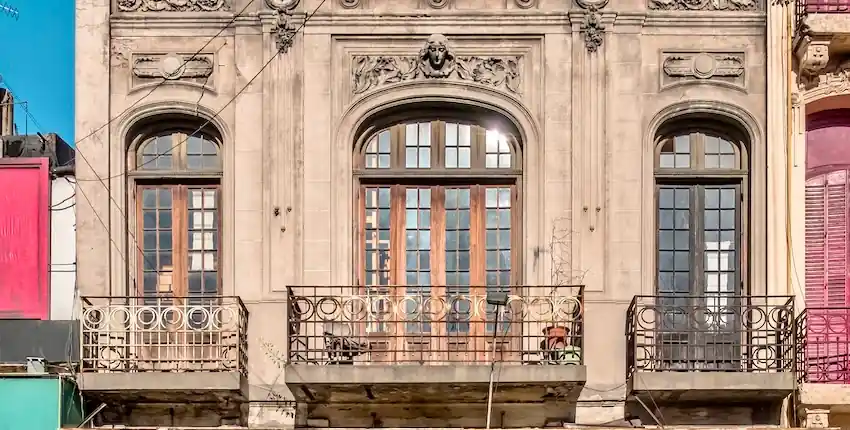
These two take most of the visitors and most of the questions, and the difference is easier to feel than to explain. Recoleta is the older, grander quarter: wide avenues, French facades, the cemetery, the museums, and the centre within a long walk. Palermo is younger and looser: low houses turned into restaurants and shops, tree lined streets, parks to the north, and the city’s evenings.
The tie-break we use is length of stay. On two or three nights, Recoleta wins, because the things you will see are closer to it and you lose less of each day in transit. From four nights, Palermo wins, because by then you are no longer sightseeing each hour and the neighbourhood you come back to at dusk starts to matter more than the one you leave in the morning.
Two exceptions. If the trip is built around food or evenings, Palermo regardless of length. If the traveller is over sixty and wants flat pavements, lifts and a hotel where a taxi is at the door, Recoleta regardless of length, and we say why in the section on pace below.
Which part of Palermo, because Palermo is four places
Palermo is the largest barrio in the city, and saying you will stay there is like saying you will stay in Manhattan. Four parts matter to a visitor, and they are far enough apart that the choice is real.
Palermo Soho, around Plaza Serrano, is the shops, the cafes and the daytime crowd, and the easiest place for a first stay. Palermo Hollywood, across the railway to the north west, is the restaurants and the bars, quieter by day and the busiest part of the city after ten at night. Palermo Chico and the embassy streets near the parks are the grand, quiet end, closest to Recoleta in feel and the shortest ride to Aeroparque. Las Canitas, by the polo ground, is a small, polished restaurant district that suits a longer stay more than a first one.
The practical rule: Soho for a first visit, Hollywood for a food trip, Chico for a quiet one, and the avenue between them, Santa Fe, for the hotels with lifts. A hotel described only as being in Palermo has not told you which of these you are getting, and it is the first thing we ask.
Which Buenos Aires neighborhoods are safe to stay in
All five above. The advisories are precise on this, and it helps to read them precisely. The United States rates Argentina at its lowest level, and what it flags in the capital is petty theft, not violence. Canada goes a step further and names streets: Florida street, Plaza de Mayo, the Retiro bus station, the Obelisk end of 9 de Julio, Puerto Madero, the Recoleta cemetery and La Boca. Look at that list and notice what it is: the tourist circuit. Pickpockets go where the cameras are.
So the neighbourhood you sleep in is not the risk. The moments are: a phone on a cafe table, a bag on the back of a chair, a cash machine at night. The one place that is different in kind is La Boca, where the advice is to stay on Caminito and leave by taxi, and no one sleeps there anyway. We set the whole picture out, with the numbers, in our guide to whether Argentina is safe, and this article leaves it there.
Two neighbourhoods that appear in older guides and not in our table are Retiro and Constitucion. Both are transport hubs with grand buildings and cheap hotels, and both are the places the advisories mean when they mention the bus stations. There is no reason for a visitor to sleep in either.
Where to stay in Buenos Aires when pace is the point
For travellers over sixty, and for those who would rather walk less between the things worth walking to, the five neighbourhoods sort themselves differently.
Recoleta and Puerto Madero are the flat, step-free options with hotels built in the last thirty years, which is the polite way of saying they have lifts. San Telmo is the opposite: the charm is in buildings from the 1880s, and the charm has stairs. Palermo is in between, with modern hotels on the avenues and converted houses on the side streets, so the building matters more than the neighbourhood.
We check this per hotel rather than per district, because a four star boutique in a converted house can have a beautiful staircase and nothing else. Our guide to what each destination asks of you after sixty has the city in that context, and our routes for travellers over sixty are built on hotels we have checked in person.

The airport rule that most guides skip
Buenos Aires has two airports and they are on opposite sides of the city. Ezeiza, the international one, is about 35 kilometres to the south west, and from any of the five neighbourhoods it is 45 minutes to an hour by road, more at rush hour. Aeroparque, the domestic one, is on the river at the northern edge of Palermo, and from Palermo or Recoleta it is a 15 to 20 minute taxi.
Which gives a rule. If your stay in the city is bracketed by an international arrival and a domestic departure, which is most itineraries, sleep in the north: Palermo or Recoleta. The international transfer costs you the same wherever you stay, but the domestic one is the early morning you will remember, and from San Telmo or Puerto Madero it is twice as long. How the domestic flights themselves route is a subject on its own, and we cover it in the ten day Argentina itinerary.
How the neighbourhood follows the theme
Our city routes are built around a theme, and the theme tends to choose the neighbourhood before we do. A tango trip spends its evenings in San Telmo and the older halls to the south, so sleeping in the south or the centre saves a taxi a night. A food trip lives in Palermo, where the restaurants are, and there is no reason to sleep anywhere else. A history trip walks the centre and Recoleta in the mornings, so Recoleta is the natural base. A first visit with no theme yet is Palermo, because it is the easiest place to be without a plan.
We set the themes out, with what each one costs and how many days it needs, in our guide to things to do in Buenos Aires. Choose the theme there, and the neighbourhood here will usually already have chosen itself.
What we would not do
Split a short stay between two neighbourhoods. Three nights is one hotel; moving on day two costs a morning and gains nothing you could not have reached by taxi. Book on price alone into the centre for a whole stay: it is fine for one night before a flight and dull for four. And book a converted house in San Telmo without asking about the stairs, if stairs matter to you. The building, not the district, is the thing to ask about.
Choosing your neighbourhood
If you take one thing from this: decide the length and the theme first, and the neighbourhood follows. Two or three nights, museums, the centre or a traveller who wants flat streets and a lift: Recoleta. Four nights or more, food, evenings, or a first visit: Palermo. Tango above all else: the south. A week of work or a rest between flights: Puerto Madero. One night before dawn: the centre.
Tell us the trip and we will put you in the right one, in a building we have checked. You can see the full range of Viajes a Buenos Aires, each with its hotel category stated, and read how the city fits into a longer journey in our ten day Argentina itinerary.
Comencé mi carrera profesional en el mundo de los viajes en 2003 donde me gradué en Esuela La Suisse en Buenos Aires, pero mi pasión por viajar viene desde mi infancia, cuando comencé poco a poco a desarrollar mi espíritu de aventura y amor por la naturaleza.
Pasé por diferentes empresas de viajes antes de crear la mía en 2008. Experiencias que me permitieron aprender sobre los viajeros, las expectativas que tienen los distintos perfiles y conocer Argentina y la región como la palma de mi mano.
Al crear Argentina Pura, mi mayor anhelo es poder colaborar con los sueños de otras personas, hacer mi aporte a la transformación del turismo en una actividad verdaderamente sustentable, que colabore con el desarrollo de las localidades nativas y a la vez promueva su crecimiento económico.
Argentina Pura es la combinación de creatividad, responsabilidad y madurez en mi mundo de viajes.
0 Comentarios